TL;DR:
ADU financing in Idaho is more accessible than most homeowners think. There is no single "ADU loan," but several established mortgage products cover ADU construction, including renovation loans from Fannie Mae and Freddie Mac, FHA-insured mortgages that allow lenders to count ADU rental income, HELOCs, cash-out refinances, and construction loans. Idaho's House Bill 166 limits HOA restrictions on internal ADUs but does not prevent cities or counties from regulating them. The math on a typical Twin Falls ADU, roughly $120,000 to $180,000 to build with $900 to $1,100 per month in rental income, often pencils out from day one.
The Financing Confusion Is Real, and It Is Stopping Good Projects
ADU financing in Idaho is one of the most misunderstood parts of the entire process. Homeowners in Twin Falls call us all the time with the same story: they love the idea of adding a backyard cottage or garage apartment, but someone told them they could not afford it, could not qualify, or could not use rental income to help pay for it. So they stopped.
Some of those homeowners lost out on years of rental income because of bad information. That is the real cost of these myths. Let's clear them up one by one so you can make an actual informed decision.
Myth 1: You Need a Special "ADU Loan" That Does Not Really Exist
This one trips people up because it sounds logical. An ADU is a specific thing, so there must be a specific loan for it, right? Not exactly. And the absence of a single branded "ADU loan" makes people think financing is not available at all.
The truth is that several well-established mortgage products cover ADU construction. Housing policy researchers have documented that the current financing landscape includes cash-out refinances, home equity loans or lines of credit, and renovation financing. That is not nothing. For a homeowner who has built equity in a Twin Falls property over the last several years (and most have, given how much values have climbed), a cash-out refinance or HELOC can be a genuinely effective tool.
On top of that, Fannie Mae allows borrowers to purchase or refinance a one-unit property and construct a new ADU using renovation loans, which expands your options well beyond equity-based products. The financing exists. It just takes a lender who knows how to structure it.
Myth 2: Rental Income from the ADU Will Not Help You Qualify
This is probably the myth that costs people the most money. The assumption is that lenders will not count future rental income from an ADU when they are deciding how much you can borrow. For years, that was largely true. It is not anymore.
The FHA made a significant policy change on this front. According to the National Association of Home Builders' summary of the HUD announcement, the FHA now allows lenders to count income from ADUs during underwriting. The specifics matter here: for properties with an existing ADU, lenders can count up to 75 percent of estimated rental income. For a new ADU that the borrower plans to build as an attachment or conversion, the allowance is 50 percent of estimated rental income. That distinction matters because most Twin Falls homeowners reading this are planning to build new, not buying a property that already has an ADU.
Freddie Mac has a similar position: rental income from an ADU on a one-unit primary residence can be used as qualifying income on purchase or refinance transactions, and borrowers can use Freddie Mac's CHOICERenovation mortgage to add or renovate ADUs.
In practical terms, this means that a 600 square foot unit in Twin Falls renting for $950 a month could help you qualify for the construction loan. Under FHA rules for a new attached ADU, 50 percent of that ($475) could count toward your qualifying income. Under Freddie Mac's guidelines for an existing ADU, the number could be higher. Either way, it changes the math considerably.
Myth 3: ADUs Are Legally Complicated or Outright Banned in Idaho
Some homeowners in Magic Valley have heard that HOAs or city rules make ADUs effectively impossible. Idaho addressed part of this concern in 2023, but the law is narrower than most summaries suggest.
Idaho House Bill 166, effective July 1, 2023, specifically targets what the statute calls "internal accessory dwelling units," meaning self-contained living spaces located inside a detached, owner-occupied home or its attached or detached garage. For those units, HOAs cannot enforce rules that strictly prohibit them, and no new restrictive covenant created after July 1, 2023 can ban them.
Three things HB 166 does not do:
It does not restrict cities or counties. The original version of HB 166 would have prevented local governments from banning ADUs, but that provision was removed in the Senate before the bill passed. Twin Falls and every other Idaho jurisdiction retains full authority to set their own ADU regulations, setbacks, lot size requirements, and design standards.
It does not cover detached backyard ADUs. If you want to build a standalone unit on a new foundation in your yard, HB 166 does not apply. Your project is governed entirely by local zoning.
It does not eliminate HOA rules. Even for internal ADUs, HOAs can still adopt reasonable regulations on size, height, setbacks, parking, and bedrooms.
None of this means your project is dead before it starts. It means the right first step is confirming what your specific lot, zoning district, and HOA rules actually allow. Most properties have a viable path forward once the constraints are clearly mapped out.
Myth 4: You Have to Own a Lot of Equity to Even Start
Equity-based financing is common, but it is not the only option. This myth keeps renters-turned-homeowners and newer buyers on the sidelines when they do not need to be.
Here is what the landscape actually looks like for homeowners who want to build or buy with an ADU in mind.
Renovation loans (Fannie Mae and Freddie Mac). These let you wrap ADU construction costs into a purchase or refinance loan, so you do not need existing equity to get started. Fannie Mae's HomeStyle Renovation product and Freddie Mac's CHOICERenovation mortgage both support ADU construction on one-unit properties.
FHA financing with ADU income. If you are buying a property with an existing or planned ADU, the FHA's updated rules let lenders factor rental income into your qualification, reducing the income burden on you personally.
USDA Rural Housing options. For Magic Valley homeowners outside city limits, this one is worth watching. The USDA Rural Housing Service has proposed a rule to allow financing of single-family homes with income-producing ADUs, specifically expanding federal lending options for rural homeowners. This rule is still in the public comment period (comments due by June 1, 2026) and has not been finalized, so it is not available yet. But it signals that federal lending is moving in a direction that benefits rural ADU builders.
Construction loans. A standalone construction-to-permanent loan can work when the finished ADU adds enough appraised value to justify the borrowing.
Pre-fab units. Lower upfront costs and faster timelines make prefab a realistic option for homeowners who want to start with a smaller capital outlay.
The right financing structure can change whether a project makes sense financially. We are not lenders, but we work closely with people who are, and we can help you ask the right questions.
Myth 5: The Monthly Costs Will Not Be Worth It
This myth is really a math problem in disguise. People hear the construction cost, panic, and stop there without running the actual numbers.
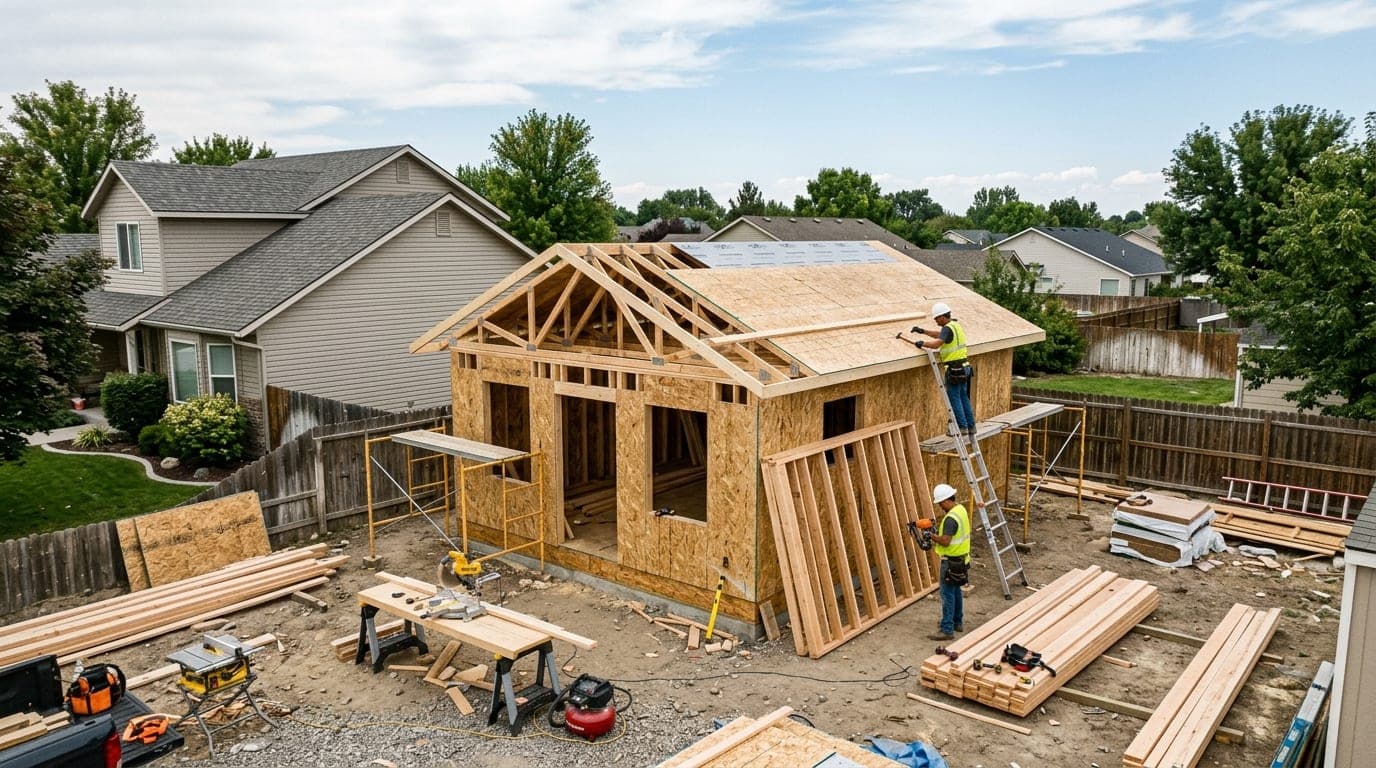
A 600 square foot detached unit in the Twin Falls area, based on our project experience and depending on finishes and site conditions, might run $120,000 to $180,000 to build. That sounds like a lot. But at current rental rates in Magic Valley, a well-located unit can bring in $900 to $1,100 per month. Current Twin Falls rental data shows average one-bedroom rents around $1,110, which supports that range. Finance $150,000 over 20 years at a reasonable rate and your payment might be $900 to $1,000 a month. The rent covers the payment almost entirely from day one, and after the loan is paid off, that income stays.
Over a ten-year period, a unit renting at $1,000 a month generates $120,000 in gross rental income. That is before you factor in appreciation on the property itself. The math works when you actually run it. The myth persists because people never get that far.
Ready to Run the Real Numbers for Your Property?
If you are a Magic Valley homeowner who has been sitting on the idea of building an ADU because the financing felt too complicated or out of reach, the real situation is more accessible than you have probably been told. The rules have changed, the federal programs have expanded, and the rental income in Twin Falls can genuinely make these projects pencil out.
Twin Falls ADU Guys offers a free Readiness Call that takes 10 to 15 minutes. We will walk through your lot, your goals, and your financing questions, and tell you honestly whether the project makes sense for your situation. We also offer a more detailed feasibility check where we assess your specific lot, zoning, utility access, and site conditions, then give you a real budget range and timeline. No pressure, no sales pitch, just real numbers for your real situation.
You can schedule your Readiness Call at twinfallsaduguys.com or call us directly at (208) 613-9830.
Frequently Asked Questions About ADU Financing in Idaho
Can I use a HELOC to finance an ADU in Twin Falls?
Yes, a home equity line of credit is one of the most common tools homeowners use. If you have owned your property for several years, you have likely built enough equity to cover a significant portion of construction costs. Talk to a local lender early to get a real number before assuming it will not work.
Does Idaho have any state-level ADU financing programs?
Idaho does not currently have a dedicated state ADU loan program the way some states like California do. However, federal programs through FHA, Fannie Mae, Freddie Mac, and USDA are available to Idaho homeowners and have expanded significantly in the last two years. A lender who has structured ADU deals before is your best resource here.
How does the FHA rental income rule actually work in practice?
It depends on whether the ADU already exists or is being built. For an existing ADU, a lender can count up to 75 percent of estimated rental income toward your qualifying income. For a new ADU you plan to build as an attachment or conversion, the allowance is 50 percent. So if your planned ADU is projected to rent for $1,000 a month and you are building new, the lender may count $500 toward your income for loan qualification purposes. If the ADU already exists on a property you are purchasing, they may count $750.
What is a feasibility check and why does it matter for financing?
A feasibility check looks at your specific lot, zoning, utility access, and site conditions to determine what type of ADU is actually buildable on your property. It matters for financing because lenders and appraisers need to understand what is being built before they can evaluate the loan. Skipping this step is one of the most common reasons ADU projects stall.
Are prefab ADUs easier to finance than site-built units?
Sometimes, yes. Prefab units often have lower total costs and faster delivery timelines, which can make the financing simpler and reduce the risk for lenders. They also tend to have more predictable final costs, which helps with appraisals. Comparing the financing picture for prefab versus site-built early in the process is one of the most useful things you can do before committing to a direction.
Is the 75 percent FHA rental income rule available to all borrowers?
Not universally. The 75 percent figure applies specifically to properties with an existing ADU where the borrower meets FHA eligibility requirements. For borrowers planning to build a new ADU as part of a renovation or conversion, the figure is 50 percent. Your lender will need an appraisal that includes a market rent analysis for the ADU to determine the qualifying amount. The specifics vary by situation, so work with a lender who has handled ADU transactions before.
Twin Falls ADU Guys Team
Twin Falls ADU Guys