What Nobody Tells You Before You Break Ground
TL;DR: The sticker price on an ADU is never the full picture. Impact fees, electrical meter installations, sitework, financing costs, permit resubmittals, and landscaping can add $15,000 to $40,000 or more to your project beyond the base construction quote. These costs are real, they are predictable, and they hit hardest when you discover them after you've already committed. A proper feasibility check before you sign anything is the single best way to avoid budget surprises on an ADU build in the Magic Valley.
You've done your homework. You've watched the YouTube videos, scrolled through the Instagram builds, and maybe even sketched a floor plan on a napkin. But hidden ADU construction costs have a way of showing up uninvited, and for homeowners in Burley, Jerome, and across the Magic Valley, those surprises can turn an exciting project into a financial headache fast.
The sticker price you see on a prefab unit or a contractor's rough estimate is almost never the full picture. There's a whole layer of site-specific, permit-driven, and utility-related expenses that most people don't discover until they're already committed. Let's walk through the six that catch people off guard most often, so you can plan smart from the start.
1. Impact Fees and Connection Charges Add Up Quickly
Impact fees are one of the first things that make homeowners do a double-take. These are one-time charges your city or county collects to offset the demand a new dwelling unit places on roads, parks, and public infrastructure. In Idaho, these fees are real and they are not small.
Based on projects we've completed across the Magic Valley, impact fees commonly run between $6,000 and $10,000, with sewer and water connection costs adding another $3,000 to $8,000 on top of that. So before a single nail is driven, you could be looking at $9,000 to $18,000 in government fees alone. In Burley and Jerome specifically, connection requirements vary by utility district, which is why getting a feasibility check before you finalize your budget is so important.
One of the first things we do at Twin Falls ADU Guys is pull the actual fee schedules for your specific address. There's no reason to guess when the numbers are out there.
2. Electrical Service Upgrades and Separate Meters
This one surprises almost everyone. If your ADU needs its own electrical meter, whether for rental purposes or just clean utility separation, you're looking at a significant expense that rarely shows up in early estimates.
The cost of a separate electrical meter varies widely depending on your utility provider, the distance from your main panel to the ADU footprint, and whether your existing service entrance needs an upgrade. In California markets, SnapADU reports that separate meter installations typically run $10,500 to $15,000 due to local utility requirements and code mandates. Idaho Power's requirements and labor costs differ from California, so Magic Valley homeowners may see different numbers, but the core lesson holds: this is a major line item that most early estimates leave out.
The age of your existing electrical service matters. Whether Idaho Power requires an upgrade to your main service entrance matters. These are site-specific variables, and they can swing your total project cost meaningfully in either direction.
3. Sitework, Grading, and Soil Conditions
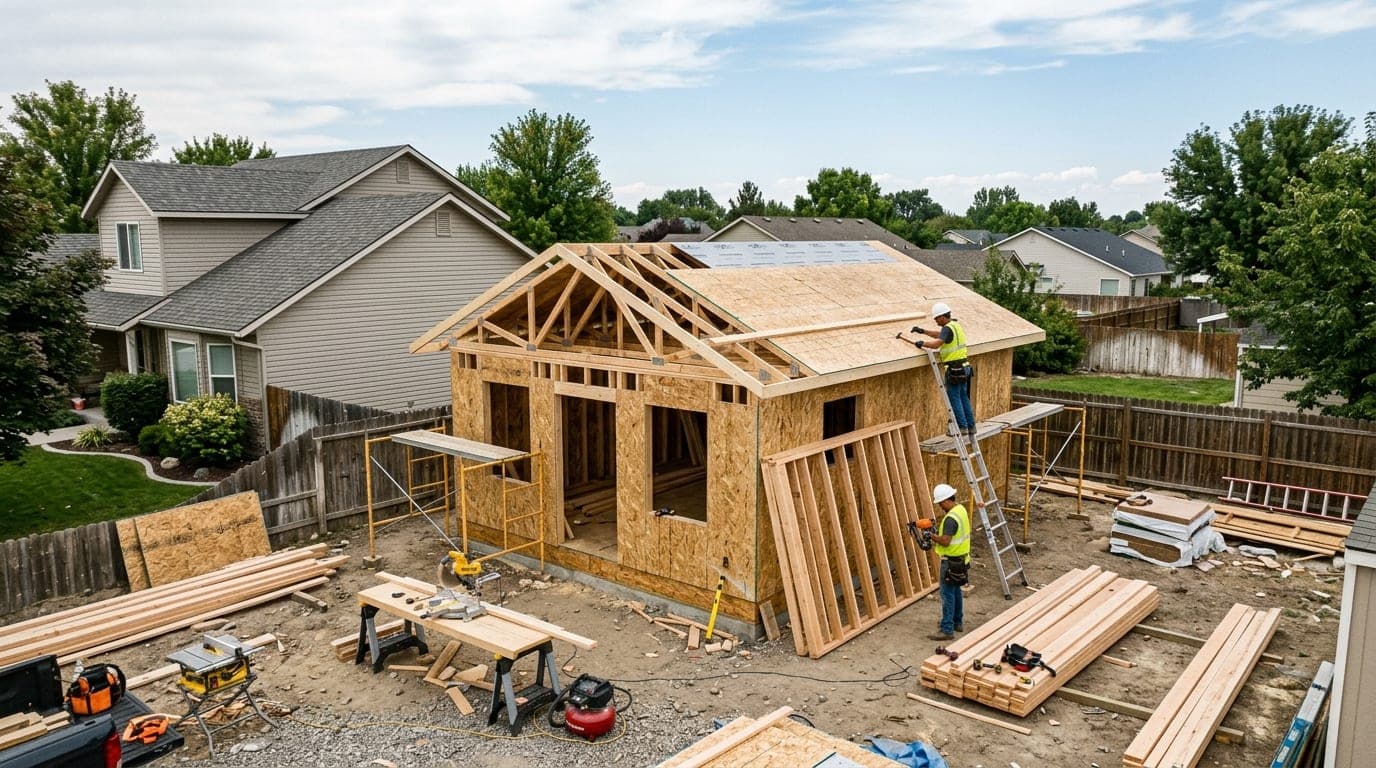
Here in Twin Falls, ID, we work on a wide range of lot types. Some are flat and straightforward. Others have slopes, poor drainage, or soil conditions that require extra preparation before a foundation can go in. Grading, excavation, and compaction are rarely covered in a builder's base quote.
Sitework is genuinely one of the most variable cost categories in ADU construction. SnapADU's analysis of sitework costs confirms that two homeowners building the exact same ADU plan can end up with invoices that differ by tens of thousands of dollars, simply because of differences in lot conditions, utility locations, and local requirements. Erosion control, retaining walls, and drainage swales are additional line items that appear once someone actually walks your property.
Knowing your site conditions before you sign a construction contract means you're not blindsided three weeks into the project. This is exactly the kind of thing a proper feasibility assessment catches early.
4. Financing Costs and Interest During Construction
Most people think about the loan amount. Fewer people think about what it costs to carry that loan during the construction period, before the ADU is finished and generating any rental income.
Construction loans typically carry higher interest rates than standard mortgages, and they accrue interest on draws as funds are released. For a project that takes six to nine months to complete, those carrying costs can add several thousand dollars to your total expense. Research from the Urban Institute on ADU financing identifies financing as a real and persistent barrier to ADU development, noting that existing mortgage products are poorly tailored for ADU construction and that changes to federal financing programs are needed to better accommodate this type of project.
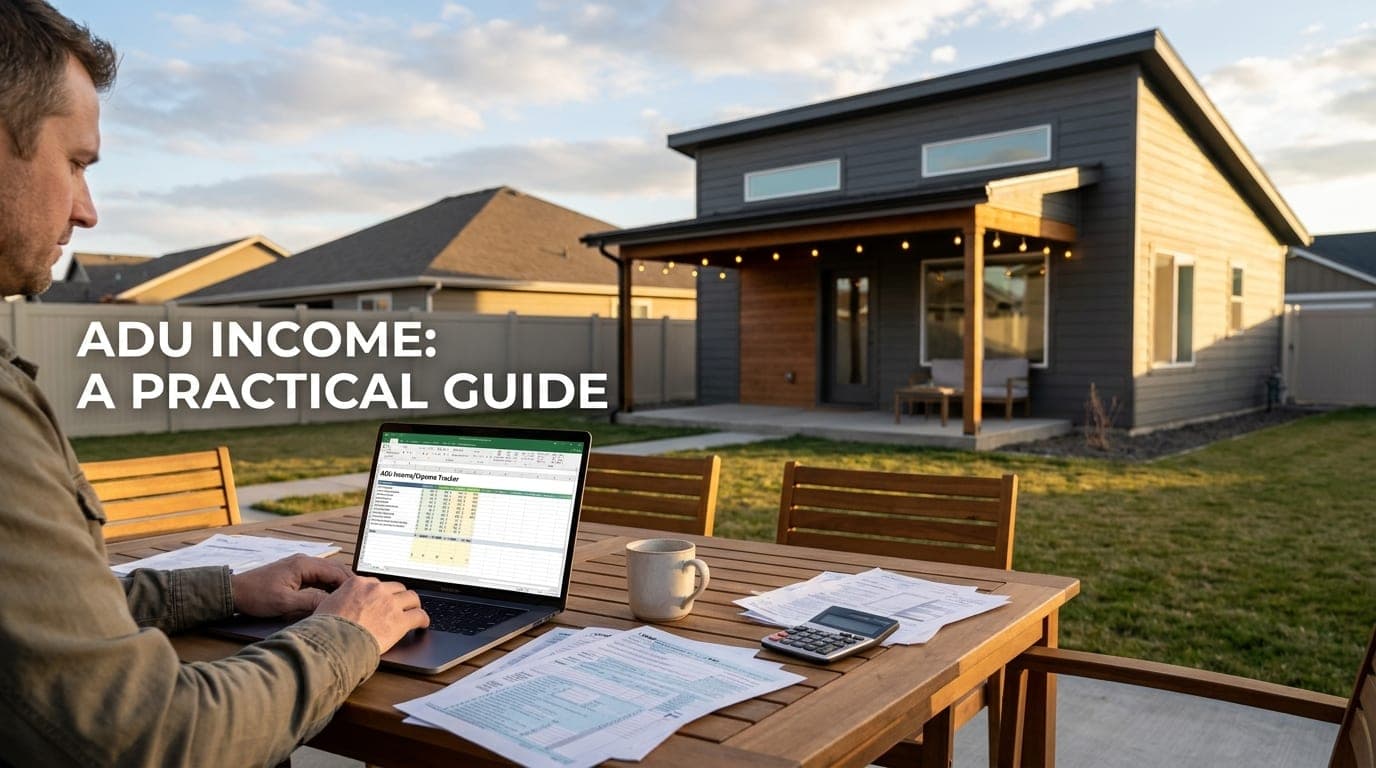
The good news is that a well-designed ADU in the Magic Valley can generate meaningful rental income. A 600 sq ft unit in a market like Twin Falls can realistically rent for $900 to $1,100 a month, which can offset a significant portion of your monthly loan payment once tenants are in place. Planning your financing structure with that timeline in mind makes a real difference.
5. Design Revisions, Plan Check Fees, and Permit Resubmittals
Permitting is not a one-and-done process in most Idaho jurisdictions. If your plans come back with corrections, and they often do on first submission, resubmittal fees apply. Every round of revisions from an architect or designer costs money. And if your project requires variances or conditional use approvals, you're looking at additional public notice fees and hearing costs.
A HUD-funded study on ADU development in Bethlehem, Pennsylvania, a small-to-medium-sized city comparable in scale to communities across the Magic Valley, found that zoning complexity and funding gaps are consistent barriers that require targeted support to overcome. Their findings reflect what we see locally: the permitting process in smaller jurisdictions can be just as complex as in larger cities, but with fewer dedicated staff to move applications through.
Working with a team that already knows the local plan check process, and has established relationships with the building departments in Twin Falls, ID and surrounding communities, is one of the most effective ways to reduce these costs. Fewer surprises means fewer resubmittals.
6. Landscaping, Fencing, and Final Site Restoration
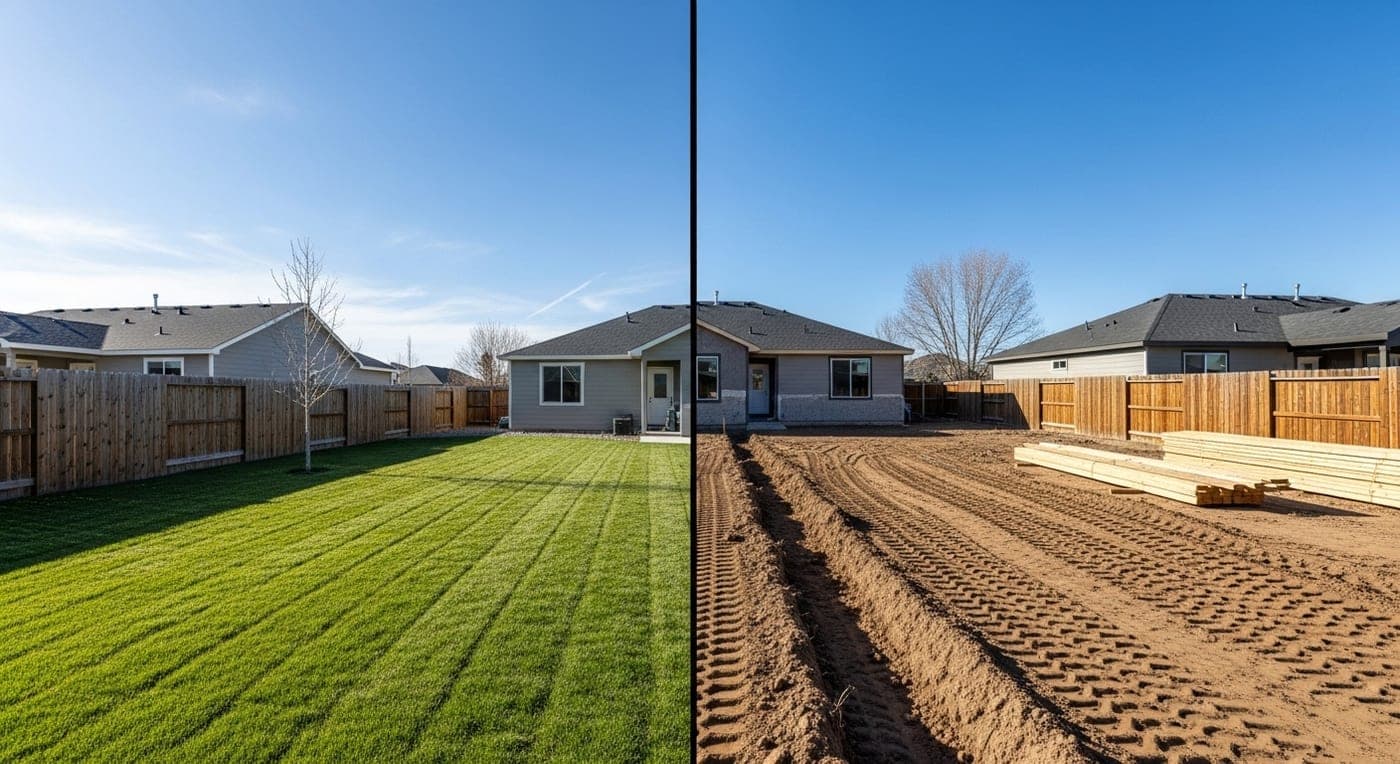
This one lands at the very end of a project, which is exactly when budget fatigue is highest. After months of construction, most homeowners are emotionally ready to be done. Then they look at the backyard and realize the construction crew left behind compacted soil, torn-up grass, and a utility trench path that needs to be filled and reseeded.
Landscaping, new fencing for privacy between the ADU and primary home, pathway lighting, and exterior finishing touches are rarely included in a construction contract. These costs can range from a few hundred dollars for basic cleanup to several thousand dollars for a properly finished yard. They are not optional if you plan to rent the unit; curb appeal and outdoor usability matter to tenants.
Building these line items into your original budget, even as rough estimates, prevents the sticker shock that hits when the contractor hands over the keys and the backyard still looks like a construction zone.
The Total Impact
When you add up impact fees, electrical work, sitework, financing costs, permit revisions, and landscaping, these hidden items can collectively add $15,000 to $40,000 or more to your project beyond the base construction quote. That's not a reason to abandon the idea. It's a reason to plan for it from day one instead of discovering it halfway through.
Frequently Asked Questions
Do impact fees apply to all ADUs in Jerome and Burley, or only certain types?
Impact fees typically apply to any new dwelling unit, including detached ADUs, garage conversions, and basement units, though the fee structure varies by jurisdiction. Jerome County and Cassia County each have their own schedules. A feasibility check specific to your address will confirm exactly what applies to your project.
Can I avoid the separate electrical meter cost if my ADU is owner-occupied or not rented out?
In some cases, yes. If the ADU is used by family members and you're not separating utilities for billing purposes, you may be able to run the unit off your existing service. However, this depends on your current panel capacity and local utility requirements. It is worth discussing with an experienced ADU builder before assuming you can skip that cost.
How much does an ADU increase my property value?
According to the National Association of Realtors, homes with ADUs sell for roughly 10 to 35% more than comparable homes without one. The higher end of that range is concentrated in high-cost, high-demand markets like California, where the Federal Housing Finance Agency reports significantly higher median appraised values for ADU properties. Magic Valley gains will likely fall on the lower end of the national range, but the equity upside is real and meaningful for most homeowners.
Is a prefab or modular ADU cheaper when you factor in all these hidden costs?
Prefab units can reduce on-site labor costs, but the hidden costs discussed here, including site prep, utility connections, and permits, apply regardless of build type. The unit cost is only one piece of the puzzle. Twin Falls ADU Guys works with both site-built and prefab options and can help you compare total project costs honestly.
How do I get a realistic all-in budget estimate before committing to anything?
The best starting point is a professional feasibility check that includes a site visit, a review of your local fee schedules, and a utility assessment. That is exactly what we offer at Twin Falls ADU Guys, and it gives you the full picture before you make any commitments or deposits.
If you're a homeowner in Burley, Jerome, or anywhere across the Magic Valley who wants to understand the real numbers before you build, reach out to Twin Falls ADU Guys. We'll walk your property, pull the local fee schedules, and give you an honest, complete picture of what your project will actually cost. No guesswork, no surprises.
Twin Falls ADU Guys Team
Twin Falls ADU Guys