TL;DR: Plan to spend 1 to 2% of your ADU's value per year on maintenance. For a $120,000 unit in Twin Falls, that's $1,200 to $2,400 annually, or $100 to $200 per month. The biggest ongoing costs are HVAC servicing, tenant turnover prep (painting, cleaning, minor repairs), exterior upkeep, and a capital reserve for eventual replacements (roof, appliances, flooring, HVAC system). Twin Falls winters add snow removal, pipe freeze prevention, and pathway maintenance to the list. None of this is surprising if you budget for it from day one. All of it is expensive if you don't.
Every blog, video, and conversation about ADUs focuses on the build. How much does it cost to construct? How do you finance it? How long does permitting take? Those are the right questions at the right time. But once the certificate of occupancy is in hand and the first tenant moves in, a different set of questions takes over.
How much does it actually cost to keep this thing running? What breaks first? What should I be setting aside every month so I'm not caught off guard in year three?
This is the guide nobody writes, because builders don't think about it and property managers assume you already know. Here's what ADU maintenance actually looks like in Twin Falls, year by year, with real numbers.
The 1 to 2% Rule
The standard rule of thumb across the property management industry is to budget 1 to 2% of the property's value annually for maintenance. For a new-construction ADU, start at the lower end. For an older conversion, plan for the higher end.
ADU Value | Annual Maintenance Budget (1%) | Annual Maintenance Budget (2%) | Monthly Set-Aside |
|---|---|---|---|
$80,000 (garage conversion) | $800 | $1,600 | $67 to $133 |
$120,000 (standard detached) | $1,200 | $2,400 | $100 to $200 |
$175,000 (larger/higher finish) | $1,750 | $3,500 | $146 to $292 |
This money goes into a dedicated maintenance reserve account. Don't commingle it with your rental income. When the mini-split dies in February, you want a fund that's ready, not a scramble to cover a $4,000 replacement out of pocket.
Year 1: What to Expect
New construction is forgiving. Everything is under warranty, nothing has worn out yet, and the tenant hasn't had time to put real mileage on the unit. But year one isn't cost-free.
Warranty punch list items. Most builders provide a one-year workmanship warranty. During the first twelve months, you'll likely notice minor issues: a door that doesn't latch properly, a cabinet that's slightly out of alignment, a faucet that drips. Document these and submit them to your builder before the warranty expires. This costs you nothing but attention.
Landscaping establishment. If the site work included new sod, plantings, or a gravel pathway, the first year requires watering, occasional replanting, and settling adjustments. Budget $200 to $500 for the first year's landscaping maintenance.
Seasonal systems check. Before the first Twin Falls winter, have the mini-split inspected to confirm the heating mode is operating correctly. Before the first summer, confirm the cooling mode. A tune-up runs $150 to $200 and catches issues before they become emergencies.
Total year one estimate: $350 to $700 (most items covered by warranty).
Years 2 to 5: Routine Maintenance Kicks In
This is when the maintenance budget starts earning its keep. The unit is past warranty, the tenant has settled in, and normal wear begins.
HVAC
Your mini-split system needs annual servicing: filter cleaning or replacement, coil cleaning, refrigerant check, and electrical connection inspection. Budget $150 to $300 per year. Skipping this doesn't save money. It shortens the system's lifespan (12 to 20 years) and increases the likelihood of a $4,000 to $8,000 emergency replacement.
Exterior
Paint or stain. Depending on your siding material, exterior paint or stain needs refreshing every 5 to 7 years. For a 600 sq ft detached ADU, expect $1,500 to $3,000 when the time comes. Setting aside $300 to $500 per year in a capital reserve covers this when it arrives.
Roof inspection. An annual visual inspection catches missing shingles, flashing issues, or debris buildup before they become leaks. A professional inspection runs $100 to $200. An asphalt shingle roof lasts 20 to 30 years. A metal roof lasts 40 to 60 years. Either way, budget for eventual replacement by setting aside $200 to $400 per year.
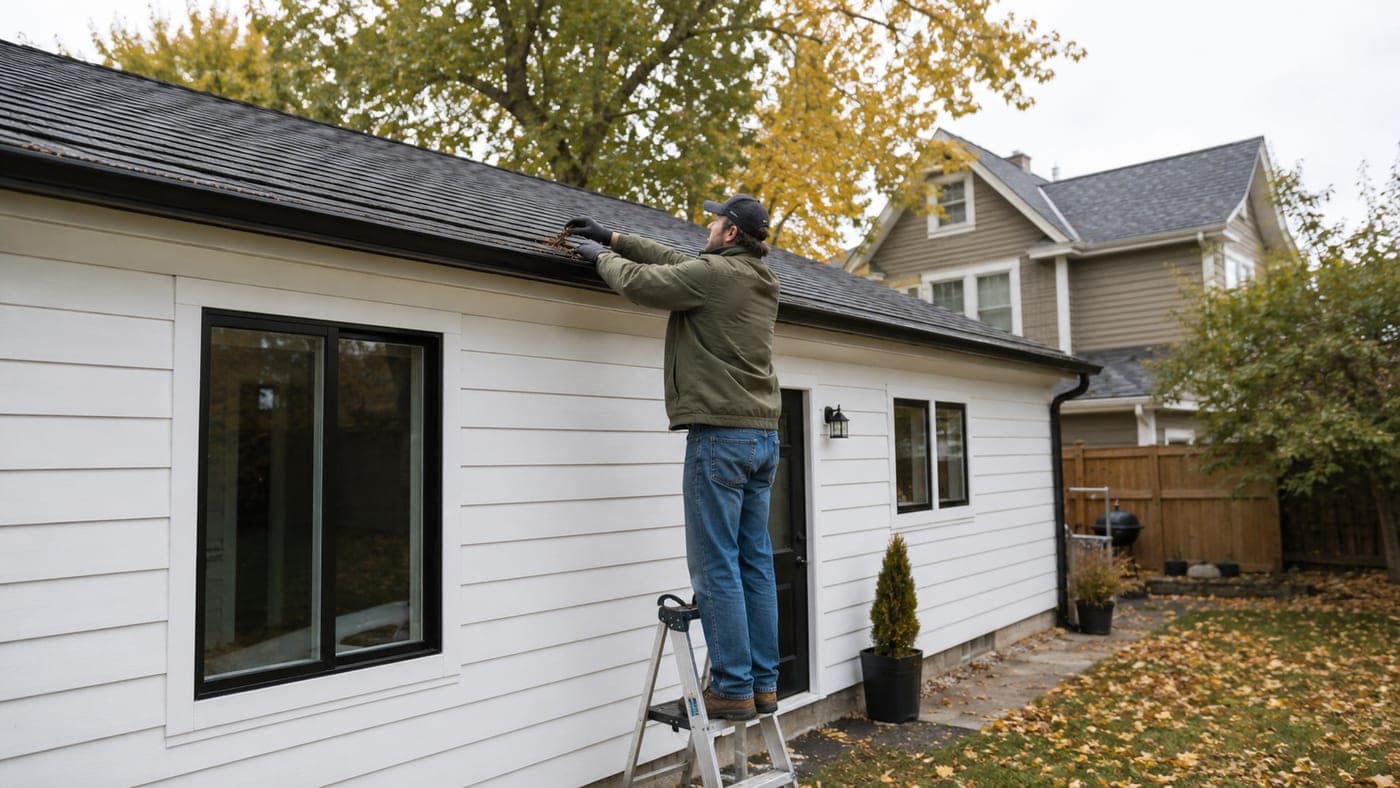
Gutters and drainage. Clean gutters twice per year (spring and fall). In Twin Falls, leaf drop and winter ice can clog gutters and downspouts, leading to water damage at the foundation. Cleaning costs $75 to $150 per visit, or do it yourself.
Plumbing
Minor plumbing issues (dripping faucet, running toilet, slow drain) are the most common maintenance calls. Budget $100 to $300 per year for minor repairs. The Twin Falls code requires ADUs to share water and sewer with the primary dwelling, so any issues with the shared line affect both households. Know where your shutoff valves are.
Appliances
Full-size appliances (refrigerator, range, washer, dryer) last 8 to 12 years with proper maintenance. Budget for replacement by setting aside $200 to $400 per year in your capital reserve. When an appliance fails, replacement costs typically run $500 to $2,000 per item, depending on quality.
Pest control
Twin Falls isn't a high-pest market, but ants, mice, and spiders are common in residential structures. An annual preventive treatment costs $100 to $200. Reactive treatment for an active infestation costs $200 to $500. Prevention is cheaper.
Annual routine maintenance total: $1,000 to $2,000
Tenant Turnover: The Cost Nobody Mentions
This is the maintenance event that catches ADU owners off guard, not because it's unpredictable, but because nobody talks about it during the build phase.
When a tenant moves out, the unit needs to be restored to rent-ready condition before the next tenant moves in. Even a clean, responsible tenant leaves behind normal wear after a 12 to 24-month tenancy.
What turnover typically includes:
Task | Estimated Cost |
|---|---|
Deep cleaning (kitchen, bathroom, floors, windows) | $200 to $500 |
Interior painting (full unit, 600 sq ft) | $800 to $1,500 |
Minor drywall repairs (scuffs, nail holes, small dings) | $100 to $300 |
Carpet replacement or LVP repair (if needed) | $500 to $2,000 |
Appliance cleaning and inspection | $100 to $200 |
Exterior pathway/entry cleanup | $50 to $150 |
Smoke detector and CO detector battery replacement | $20 to $50 |
Re-keying locks or reprogramming smart lock | $50 to $150 |
Total turnover cost | $1,820 to $4,850 |
Not every turnover requires every item on this list. A tenant who stayed 12 months and kept the place clean might only need cleaning, paint touch-ups, and lock re-keying ($400 to $800). A tenant who stayed three years with pets will likely need the full treatment.
How to budget for it: Set aside one month's rent per year as a vacancy and turnover reserve. If your ADU rents for $1,000 per month, that's $1,000 per year earmarked for the gap between tenants and the cost of getting the unit ready. If you don't turn over in a given year, the money rolls into your reserve for when you do.
Twin Falls-Specific Maintenance
A few maintenance items matter more here than in milder climates.
Winter pathway maintenance
The path between the main house and the ADU (and between the ADU and the parking area) needs to be cleared of snow and ice throughout winter. This is both a safety issue and a liability issue. If a tenant or their guest slips on an icy pathway on your property, you're potentially liable.
Options: Handle it yourself with a shovel and ice melt ($50 to $100 per season in materials). Hire a snow removal service ($50 to $100 per visit, or $300 to $600 for a seasonal contract). Install a heated pathway mat at the ADU entry ($200 to $500 one-time cost, plus electrical costs to run it).
Pipe freeze prevention
Twin Falls temperatures regularly drop below freezing from November through March. Any exposed or poorly insulated water lines running to the ADU are at risk. During construction, pipes should be buried below the frost line and insulated. After construction, your ongoing responsibility is to ensure the tenant knows to keep the unit heated above 55°F during winter, even if they're away. A frozen pipe that bursts can cause thousands of dollars in water damage.
Siding and exterior wear
Idaho's high desert climate cycles between intense summer sun and winter freeze-thaw. Wood siding needs resealing or restaining more frequently than in moderate climates. Fiber cement siding holds up better but still requires periodic inspection for cracks from freeze-thaw cycling. Whatever material your ADU uses, inspect it every spring after winter's worst.
Evaporative cooling / HVAC load
Twin Falls summers are dry, which means your mini-split's cooling efficiency is generally good. But dust and pollen from the surrounding agricultural landscape can clog outdoor condensing unit fins faster than in urban environments. Clean or rinse the outdoor unit every spring.
The Capital Reserve: Planning for Big Replacements
Beyond annual maintenance, certain components will eventually need full replacement. These are predictable costs that arrive on a 10 to 30 year cycle. Setting aside money now prevents a crisis later.
Component | Expected Lifespan | Replacement Cost | Monthly Set-Aside |
|---|---|---|---|
Mini-split HVAC system | 12 to 20 years | $4,000 to $8,000 | $20 to $55 |
Asphalt shingle roof | 20 to 30 years | $5,000 to $10,000 | $15 to $40 |
Water heater | 10 to 15 years | $800 to $2,000 | $5 to $15 |
Appliances (full set) | 8 to 12 years | $3,000 to $6,000 | $20 to $60 |
Interior paint (full repaint) | 3 to 5 years | $800 to $1,500 | $15 to $40 |
Exterior paint/stain | 5 to 7 years | $1,500 to $3,000 | $20 to $45 |
Flooring (LVP replacement) | 10 to 15 years | $2,000 to $4,000 | $10 to $30 |
Total capital reserve | $105 to $285/month |
Combined with your routine maintenance budget ($100 to $200/month) and your turnover reserve ($83/month at $1,000 rent), your total monthly maintenance set-aside should be approximately $288 to $568 per month.
That sounds like a lot until you compare it to your rental income of $900 to $1,100 per month. Even at the high end, maintenance reserves represent about 30 to 50% of gross rent, which is consistent with the industry-standard 50% rule (half of gross rent goes to all operating expenses, including taxes, insurance, and maintenance).
A Sample Annual Maintenance Calendar for Twin Falls
January/February: Check for ice dams, clear pathways, confirm heating is working properly, inspect for pipe freeze risk.
March: Spring HVAC tune-up, exterior inspection after winter (siding, roof, gutters, foundation), clean outdoor mini-split condenser.
April/May: Landscaping refresh, pest prevention treatment, check pathway and driveway for winter heave damage.
June/July: Confirm cooling is operating efficiently, inspect weather stripping on doors and windows.
August/September: Gutter cleaning before fall leaf drop, exterior touch-up painting if needed.
October/November: Fall HVAC check, winterize exterior (disconnect hoses, insulate exposed pipes, confirm tenant knows freeze prevention protocol).
December: Confirm snow removal plan is in place, test smoke and CO detectors.
Frequently Asked Questions
How much should I budget monthly for ADU maintenance?
For a $120,000 ADU in Twin Falls, budget $100 to $200 per month for routine maintenance, plus $83 per month for turnover reserve (one month's rent annually), plus $105 to $285 per month for capital replacement reserves. Total: roughly $290 to $570 per month. This covers routine upkeep, tenant turnover, and eventual major replacements.
What breaks first in a new ADU?
In our experience, the most common first-year issues are cosmetic: doors that need adjustment, caulk that needs touch-up, and minor settling cracks in drywall. These are typically covered under your builder's warranty. The first significant expense usually arrives in years 3 to 5, often a plumbing repair or an appliance issue.
Can I deduct maintenance costs on my taxes?
Yes. Maintenance and repair expenses on a rental ADU are generally deductible on Schedule E of your federal tax return. Capital improvements (replacements that extend the useful life of the property, like a new roof or HVAC system) are depreciated over time rather than deducted in a single year. Consult a tax professional for your specific situation.
Should I handle maintenance myself or hire a property manager?
For a single ADU on your own property, self-management is practical and saves the 8 to 10% management fee. You're already on-site, so responding to issues is easy. If maintenance becomes burdensome or you're uncomfortable handling tenant interactions, a property manager can take over for roughly $90 to $110 per month at Twin Falls rental rates.
Does the type of ADU (garage conversion vs. detached) affect maintenance costs?
Somewhat. Garage conversions may have higher maintenance costs if the original structure wasn't built to residential standards (older foundations, insufficient insulation, lower-quality framing). A purpose-built detached ADU with new materials and systems will generally have lower maintenance costs in the first 10 years.
What's the most expensive maintenance surprise ADU owners face?
HVAC failure in winter. A mini-split that dies in January requires emergency replacement at premium pricing, plus potential temporary heating costs for the tenant. Annual servicing and a funded capital reserve prevent this from being a financial emergency.
Building an ADU is the exciting part. Maintaining it is the part that determines whether the investment actually pays off over time. If you're planning a project in Twin Falls and want to understand the full lifecycle cost, not just the construction cost, reach out to Twin Falls ADU Guys. We help homeowners plan for what comes after the build, not just what happens during it.
Twin Falls ADU Guys Team
Twin Falls ADU Guys