TL;DR:
A garage conversion costs roughly 30 to 50% less than a detached ADU and can be finished in half the time. But detached units typically command higher rent, offer more design flexibility, and add more long-term property value. In Twin Falls, your lot coverage, existing garage condition, and the 45% size cap in the city code will likely make the decision for you before budget even enters the picture. The best first step is knowing what your property can actually support.
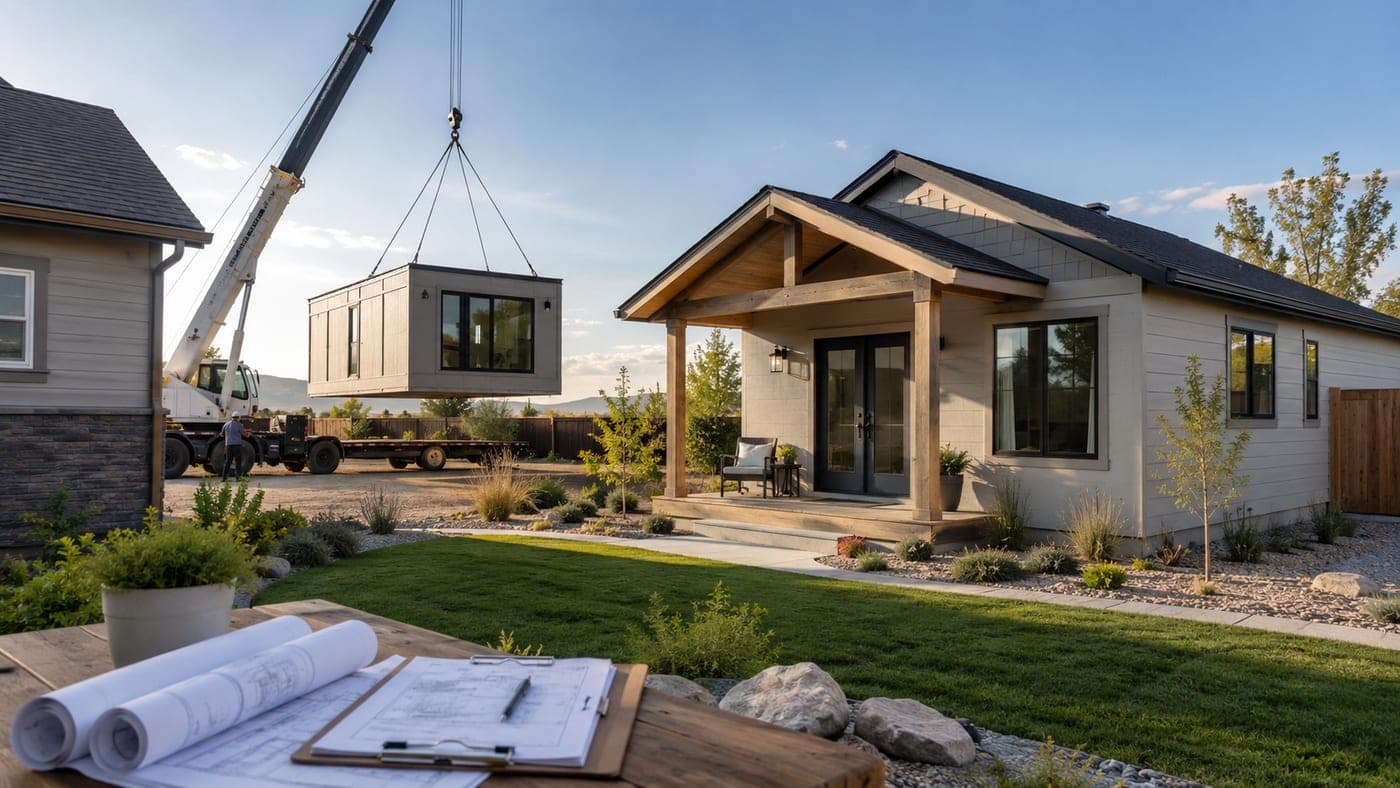
If you're considering an ADU in Twin Falls, one of the first forks in the road is whether to convert your existing garage or build a new detached unit from scratch. Both are permitted under the Twin Falls Uniform Development Code, and both can generate rental income, house a family member, or add long-term value to your property. But they are very different projects with different costs, timelines, and tradeoffs.
Most of the comparison content online is written for California homeowners dealing with $300,000 detached builds and $150,000 garage conversions. Twin Falls is not San Diego. Labor is cheaper, lots are generally larger, and the regulatory landscape is simpler. This guide is written specifically for Magic Valley homeowners working with Magic Valley numbers.
The Cost Difference Is Real, But Not as Simple as It Looks
The headline number is straightforward. Nationally, garage conversions typically cost 30 to 50% less than detached new construction because the foundation, exterior walls, and roof already exist. You're paying to retrofit an interior, not build a structure from the ground up.
According to Angi's 2026 data, garage-to-ADU conversions nationally average $110,000, with a range of $25,000 for a basic attached conversion up to $225,000 for a larger detached garage with full kitchen and bathroom buildout. Detached new-construction ADUs nationally range from $150,000 to over $300,000, depending on size, finishes, and site conditions.
In the Magic Valley, those numbers come down. Industry sources consistently note that rural areas and smaller cities can run 30 to 50% below coastal pricing, though contractor availability and material shipping can offset some of those savings. A reasonable planning range for Twin Falls homeowners looks something like this:
Garage conversion (400 to 600 sq ft): $50,000 to $120,000, depending on the condition of the existing structure, utility proximity, and finish level.
Detached new build (400 to 600 sq ft): $100,000 to $200,000 depending on site prep, foundation requirements, and design complexity.
These are planning estimates, not quotes. Your actual number depends on your specific lot, your existing garage's condition, and what the feasibility check reveals about utilities and site conditions. If you want to understand the cost items that catch homeowners off guard, regardless of build type, our hidden costs breakdown covers the six most common surprises.
Where the Money Goes Differently
The cost gap between the two approaches comes down to a handful of line items.
Foundation. A garage conversion uses the existing slab. A detached build requires excavation, footers, and a new foundation pour. In Twin Falls, where ground frost can delay foundation work before mid-March, this step alone can add $15,000 to $30,000 and several weeks to the timeline.
Framing and roofing. A garage already has walls and a roof. They may need insulation, drywall, new windows, and possibly structural reinforcement, but you're modifying an existing shell rather than building one. A detached ADU needs full framing, sheathing, roofing, and exterior finishes from scratch. The Twin Falls city code also requires that any new ADU structure match the existing roof pitch, siding, and windows of the primary home, which can increase material costs on a detached build if your house has non-standard finishes.
Utilities. This is where the comparison gets interesting. The Twin Falls code states that ADUs "shall receive water, sewer, and sanitation services from the primary dwelling" and that "additional service lines and/or meters shall not be installed." That means both conversion and detached units connect to your existing services. But the distance matters. A garage attached to or near the house has a shorter utility run than a detached structure at the back of the lot. Every additional foot of trenching adds cost, and sewer lines in particular need a proper fall (downhill slope) to work without a pump.
Sitework. A garage conversion typically requires minimal site preparation since the structure already sits on a finished pad. A detached ADU may require grading, compaction, drainage work, and access planning, all of which are highly variable depending on your lot conditions.
Timeline: Months vs. Seasons
Garage conversions are significantly faster. With an existing structure, you skip excavation, foundation curing, framing, and roofing. Most of the work is interior: insulation, drywall, electrical, plumbing, HVAC, flooring, and finishes.
A realistic timeline comparison for a straightforward 500 sq ft ADU project in Twin Falls:
Garage conversion: 3 to 5 months from permit approval to certificate of occupancy. Design and permitting add 2 to 3 months on the front end, so figure 5 to 8 months total from your first conversation to a finished unit.
Detached new build: 5 to 8 months of construction after permit approval, with 2 to 4 months of design and permitting ahead of that. Total timeline: 7 to 12 months from first conversation to certificate of occupancy.
That 2 to 4 month difference matters more than it sounds. If your goal is rental income, finishing in August instead of December means collecting rent through the fall and winter rather than waiting until spring. At Magic Valley rental rates ($900 to $1,100 per month for a 600 sq ft unit), a 3-month delay represents $2,700 to $3,300 in lost income.
Rental Income and Long-Term Value
Here's where detached units start to close the cost gap. Across the country, detached ADUs consistently command higher monthly rent than garage conversions because they offer tenants more privacy, a separate entrance, their own outdoor space, and the psychological feeling of living in a standalone home rather than a converted garage.
In Twin Falls, a well-finished garage conversion might rent for $750 to $950 per month. A comparable detached unit with its own entrance, small porch, and clear separation from the main house could reasonably fetch $900 to $1,100 per month. That $150 to $200 monthly difference adds up to $1,800 to $2,400 per year, which compounds meaningfully over the life of the unit.
On the property value side, both types of ADU add value. But appraisers generally value purpose-built detached units higher than conversions because they represent additional livable square footage on the lot rather than repurposed existing square footage. A detached ADU also preserves the option to convert the garage back if a future buyer wants that flexibility.
One additional consideration: if you convert your garage and don't replace the parking, you lose covered vehicle storage. In Twin Falls, where winter temperatures regularly drop below freezing, and snow is common from November through March, that's not a trivial tradeoff. The city code also requires one additional parking space for the ADU itself, so you'll need to plan for where both you and your tenant will park.
Twin Falls Code Requirements That Apply to Both
Regardless of which path you choose, the Twin Falls Uniform Development Code has several ADU-specific rules that affect your project:
Size cap. Your ADU cannot exceed 45% of the living space of the principal residence. For a 1,600 sq ft home, that means a maximum ADU of 720 sq ft. For a 1,200 sq ft home, the cap drops to 540 sq ft. This rule applies equally to conversions and new builds.
Design matching. Any new construction or addition created for an ADU must be "designed consistent with the existing roof pitch, siding, and windows of the principal dwelling unit." This applies to detached builds and to any exterior modifications on a garage conversion (new windows, siding changes, roofline alterations).
Shared utilities. ADUs must receive water, sewer, and sanitation from the primary dwelling. Separate service lines and meters are not allowed. This simplifies the utility picture but also means your existing services need enough capacity to handle a second dwelling.
Parking. One additional parking space is required for the ADU.
One ADU per lot. Only one ADU is permitted per legal lot or parcel.
So Which One Should You Build?
The decision usually comes down to three factors, and most homeowners find that one of them dominates the others.
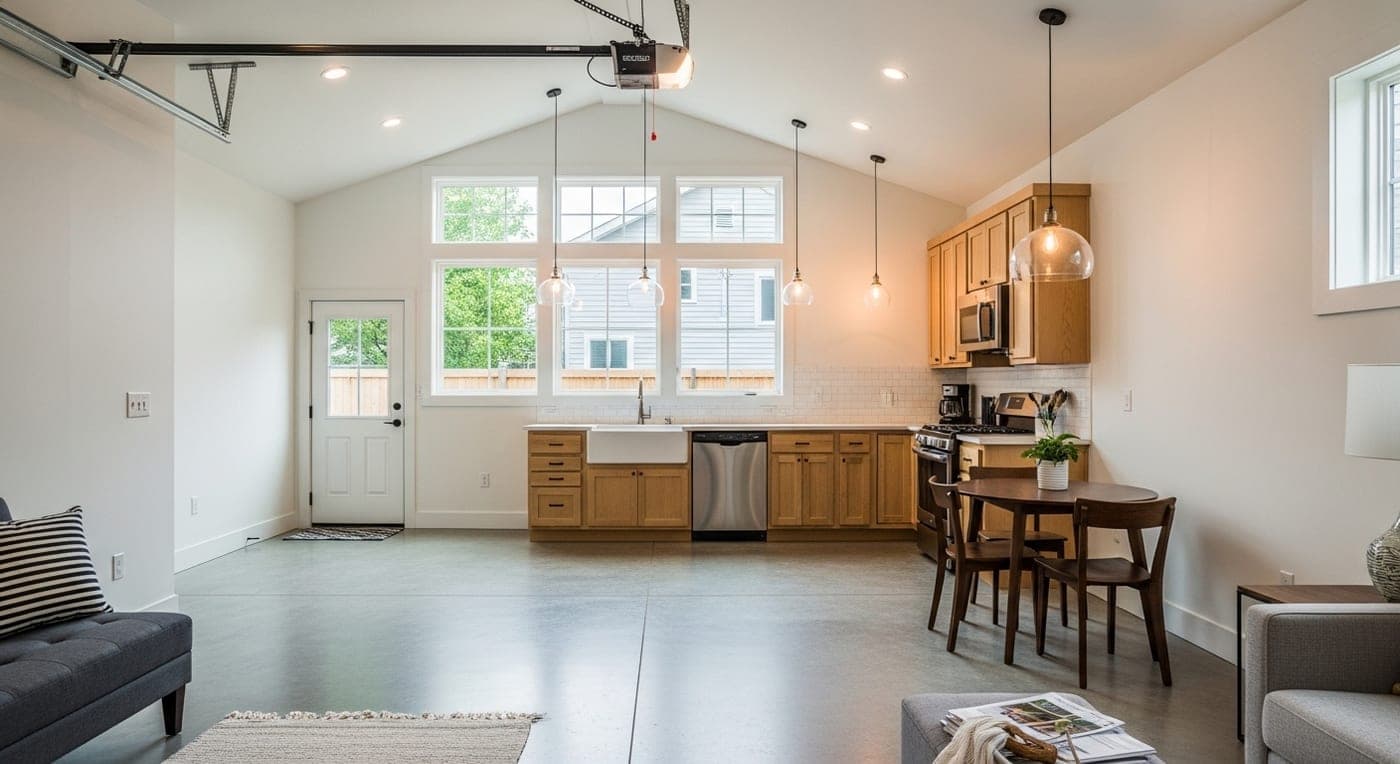
A garage conversion makes more sense if you already have a detached garage in decent structural condition, your budget is under $100,000, you want to start collecting rent as quickly as possible, or your lot doesn't have room for a second structure after accounting for setbacks and coverage limits.
A detached build makes more sense if you don't have an existing garage worth converting (or you need to keep your garage for vehicles and storage), you want to maximize rental income and long-term property value, you have adequate lot space and utility access, or your budget allows for the higher upfront investment with an eye on long-term return.
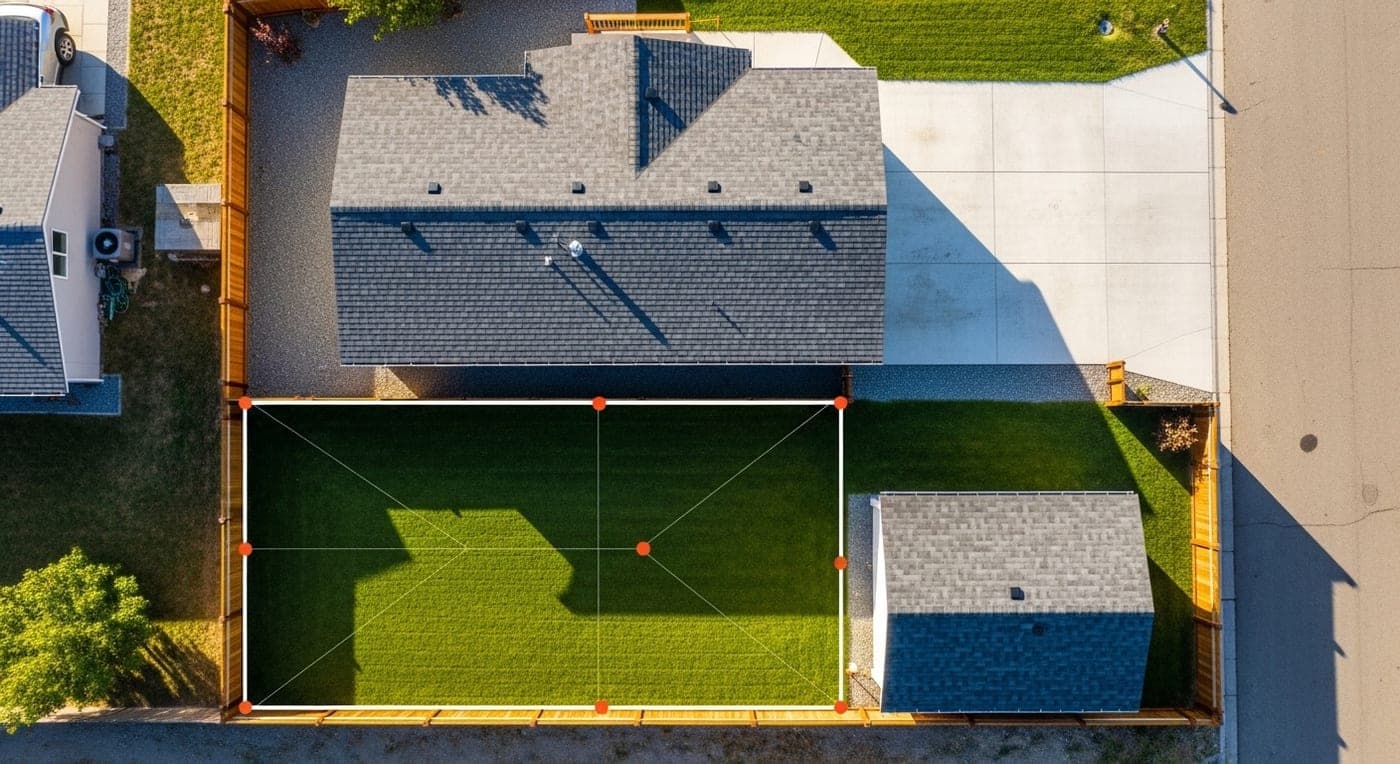
Neither path works if your lot coverage is already at or near the city's maximum (typically 40 to 50% of the lot, depending on zoning district), your principal residence is too small for the 45% size cap to allow a meaningful ADU, or your utilities can't support a second dwelling without major upgrades.
A feasibility check is the fastest way to answer these questions for your specific property. It takes the guessing out of lot coverage calculations, utility capacity, setback measurements, and zoning eligibility before you spend money on design or architectural plans.
Frequently Asked Questions
Is a garage conversion always cheaper than a detached ADU?
Almost always, yes. The existing foundation, walls, and roof eliminate the most expensive phases of construction. However, the gap can narrow significantly if the garage is in poor condition, needs structural reinforcement, or requires extensive utility work. In rare cases where a garage needs a new foundation or complete re-framing, a detached build on a clean pad can actually be more cost-effective.
Can I convert an attached garage, or does it have to be detached?
Both are permitted under the Twin Falls code. The ADU "may be added to, included within the principal residence, or located in a detached accessory building." An attached garage conversion creates what functions as an attached ADU. A detached garage conversion creates a detached ADU. The permitting and design requirements apply the same way to both.
Will I lose my garage if I convert it?
Yes, unless you build a replacement parking structure, which adds cost. For homeowners who rely on their garage for vehicle storage, tools, or workshop space, this is often the deciding factor in favor of a detached build. In Twin Falls winters, losing covered parking is a meaningful quality-of-life consideration.
Does a garage conversion add as much property value as a detached ADU?
Both add value, but detached ADUs generally add more because they represent net new livable square footage on the property. A garage conversion repurposes existing square footage, which appraisers typically value somewhat lower. That said, a well-finished garage conversion that generates rental income still represents a strong return on investment.
How do I know if my garage is structurally suitable for conversion?
The key factors are foundation condition (does the slab have cracks, settling, or moisture issues), ceiling height (most codes require a minimum of 7.5 feet for habitable space), structural integrity of the walls and roof, and electrical panel capacity. A feasibility check evaluates all of these before you commit to design work.
What if my lot can't support either option?
If your lot coverage is maxed out, your home is too small for the 45% size cap to work, or utility capacity is insufficient, an ADU may not be feasible on your property right now. That's a disappointing answer, but it's far better to learn it during a feasibility check than after you've paid for architectural plans.
If you're weighing these two paths and want a clear answer for your specific property, reach out to Twin Falls ADU Guys. We'll evaluate your lot, assess your existing garage (if you have one), and tell you honestly which approach fits your goals, your budget, and your property. That conversation is worth having before you commit to either direction.
Twin Falls ADU Guys Team
Twin Falls ADU Guys