Spring Home Inspection Checklist: How to Tell If Your Twin Falls Property Can Support an ADU
TL;DR: Your spring property walkthrough is the perfect time to assess whether your lot can support an accessory dwelling unit. The key factors are lot size, setbacks, existing structures, utility capacity, and access. Current Twin Falls one-bedroom rents average around $1,100 per month, making ADUs a strong investment case. Federal data shows properties with ADUs consistently appraise higher than those without, and university research estimates meaningful property value increases from adding a unit. This guide covers what to look for on your property, what the research says about ADU value, and how to take the first steps.
Your Spring Walkthrough Already Covers Half the Work
Every spring in Twin Falls, homeowners walk their yards, check for frost heave damage, poke at fence posts, and make a mental list of what needs fixing. It is a good habit. But this year, while you are doing your seasonal property walkthrough, there is one more question worth adding to your checklist: could your property support an accessory dwelling unit?
If you have been curious about ADUs but felt overwhelmed by the process, you are not alone. Most homeowners know the idea is interesting but are not sure where to start or whether their lot even qualifies. That is exactly what a spring inspection mindset is good for. You are already looking at your property with fresh eyes, so let's make that walkthrough count.
What Your Spring Inspection Should Cover
A typical spring inspection focuses on damage from winter and deferred maintenance. That is important, and we are not skipping it. Here is what you should be walking through every April or May.
Roof and gutters. Look for missing shingles, ice dam damage, and clogged downspouts that redirect water toward your foundation.
Foundation and exterior walls. Check for new cracks, efflorescence (white mineral deposits), or shifting that appeared over the freeze-thaw cycle.
Drainage and grading. Is water moving away from your home? Flat or negative-grade yards cause moisture problems that affect basements and slabs.
HVAC and mechanical systems. Schedule your annual tune-up if you haven't already. Catching issues in spring beats an emergency call in July.
Decks, patios, and outbuildings. Frost heave and moisture expansion can shift footings, loosen fasteners, and create safety hazards.
Utility access points. Note where your electrical panel is, where your water main enters, and where your sewer lateral runs. You will need this information if you ever add a structure.
That last item is where things get interesting. Most homeowners record utility locations for maintenance purposes. But if you are thinking about an ADU, this information becomes your first real feasibility data point. Where your utilities run determines how easy or how expensive it is to connect a second dwelling on the lot.
What Makes a Property a Good ADU Candidate in Twin Falls
While you are walking your yard this spring, here are the specific things that indicate whether your lot is a strong candidate.
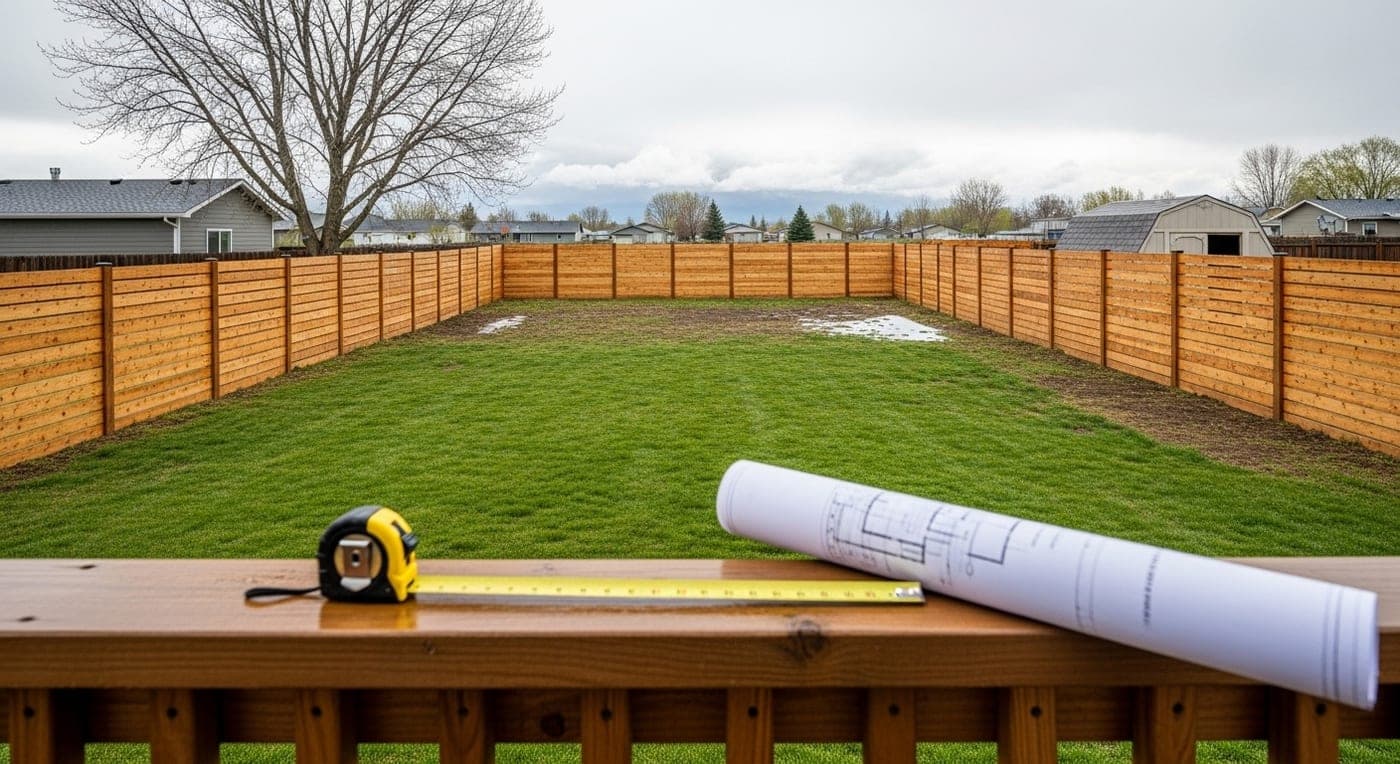
Lot size and setbacks. Twin Falls zoning requires setbacks from property lines, and your usable building area shrinks once you account for them. Look at your back and side yards with fresh eyes. A 40 by 60 foot open backyard is often enough for a well-designed detached unit. Requirements vary by zoning district, so check with the Twin Falls Planning and Zoning office to confirm the specific rules for your parcel.
Existing structures. Do you have a garage, a shed, or a bonus room above the garage? Conversion ADUs are often the most cost-effective path because you are working with an existing foundation and framing. Check those spaces for moisture, structural integrity, and ceiling height during your spring walkthrough.
Utility capacity. This is where homeowners often get surprised. Your existing electrical panel may or may not have capacity to support a second unit. Your sewer lateral may be in great shape, or it may need lining. The Twin Falls County Building Department reviews against the 2018 International Residential Code and International Building Code with Idaho Amendments, including a 30 psf snow load and 24 inch frost depth. Noting the condition of your systems during your spring inspection gives you a head start on understanding your ADU budget.
Access. Can a unit be reached from a separate entrance? Can someone park without crossing your primary living space? These are not dealbreakers, but they affect livability and rental value.
What the Research Says About ADU Property Value
Let's talk about what you actually gain by building an ADU. The value case is strong, but the numbers deserve honest context because most of the available research comes from California markets, not Idaho.
A 2025 analysis by the Federal Housing Finance Agency examined California appraisal data from 2013 to 2023 and found that properties with ADUs had a median appraised value of $1,064,000, compared to $715,000 for properties without. That is a significant gap, though it reflects multiple factors beyond just the ADU itself, including lot size, neighborhood characteristics, and the types of homeowners who choose to build. The directional finding, that ADU properties appraise meaningfully higher, is consistent across the studies that exist.
On the academic side, a working paper by Sarah Thomaz at UC Irvine's Department of Economics used an instrumental variable approach on Los Angeles County data from 2013 to 2019 and estimated that adding an ADU increases property value by roughly 35 to 50 percent, depending on the statistical method used. The OLS estimate was 37 percent, and the IV estimate was approximately 50 percent. This is a working paper, not a peer-reviewed publication, and it uses LA County data. The range is wide enough that you should not take any single number as gospel. But the direction is clear: ADUs add substantial appraised value.
Idaho markets do not track California prices dollar for dollar, and Twin Falls is a very different housing market. But the underlying logic, that adding a permitted income-producing unit to a property increases its value, applies broadly. As more ADUs are built in Twin Falls and comparable sales data grows, appraisers will have stronger local comps to work with.
What an ADU Can Earn in Twin Falls
Current rental market data from Apartments.com shows the average one-bedroom rent in Twin Falls is approximately $1,110 per month. A well-designed, well-located 600 square foot detached ADU should rent competitively in that range, though ADUs sometimes come in slightly below comparable apartments because they may lack amenities like on-site management or common areas.
A conservative estimate of $900 to $1,100 per month in rental income is realistic for a quality one-bedroom ADU in the Twin Falls area. That rental income often covers most or all of a construction loan payment from day one, meaning the ADU can effectively pay for itself while building long-term equity.
On the construction cost side, a 2021 survey by UC Berkeley's Terner Center for Housing Innovation found that 37 percent of California ADUs cost less than $100,000 to build and 71 percent came in under $200,000. Those numbers reflect California construction costs from the 2020 era, so they should be adjusted for both construction cost inflation since then and the fact that Idaho labor and material costs are generally lower than California. Modestly sized units in the Magic Valley can still land within or near that lower range, especially with pre-fab options.
Why Spring Is the Right Time to Start
Permitting and design take time. A straightforward ADU project from feasibility check to breaking ground typically takes four to seven months when things move reasonably well. That means a project you start planning in April or May could have a permitted, finished unit before the following spring.
Spring also gives you the best conditions for site assessment. You can see exactly how your yard drains during snowmelt. You can identify where frost has shifted things. You have full visibility of your property before summer landscaping fills in and obscures what is really there.
Both AARP and the American Planning Association have published extensively on the role ADUs play in expanding housing options, enabling aging in place, and making better use of existing residential infrastructure. Those benefits are not abstract policy concepts. In Twin Falls, they look like a parent building a unit for an aging mother, a homeowner offsetting their mortgage with rental income, or a young professional finding an affordable rental in a neighborhood where full-size homes are out of reach.
Ready to Find Out If Your Property Qualifies?
If your spring walkthrough has you thinking it might be time to put that backyard to work, we would like to help you find out. Twin Falls ADU Guys offers a free Readiness Call that takes 10 to 15 minutes. We will ask about your lot, your goals, and your timeline, then tell you honestly whether what you are picturing is realistic for your property. If it is, we walk you through the next step. If it is not, we tell you that too, and explain why. No pressure and no sales pitch.
We serve homeowners across Twin Falls, Jerome, Burley, Rupert, Filer, Buhl, Kimberly, Gooding, and Hagerman. You can schedule your Readiness Call at twinfallsaduguys.com or call us directly at (208) 613-9830.
Frequently Asked Questions
Will an ADU definitely increase my home's appraised value in Twin Falls?
Appraisals are property-specific and appraiser-specific, so no one can guarantee a number. What the research consistently shows is that ADUs add measurable appraised value in markets where comparable ADU sales exist. As more ADUs are built in Twin Falls, those comps grow, and the value case becomes easier for appraisers to document.
What is the minimum lot size for an ADU in Twin Falls?
Lot requirements vary by zoning district. Many residential zones in Twin Falls allow ADUs on relatively modest lot sizes, but setback requirements and existing structure footprints affect what is actually buildable. We recommend calling the Twin Falls Planning and Zoning office at (208) 735-7267 to confirm the specific rules for your parcel.
Can I use a pre-fab or manufactured unit for my ADU?
Yes, and it is often a smart path. Pre-fab ADU units have improved dramatically in quality and design, and they can reduce construction timelines significantly. The key is confirming that the unit meets Idaho building codes and local permitting requirements. Your contractor and the building department can help you evaluate whether pre-fab makes sense for your lot and budget.
How long does the full ADU process take from spring planning to move-in?
For a detached ADU starting from scratch, expect six to twelve months from your first feasibility conversation to a finished, permitted unit. Conversions of existing garages or bonus spaces can move faster. Pre-fab units can also compress the timeline considerably. Starting in spring means you are working with the best weather window for both site assessment and construction.
What financing options exist for ADU construction?
Construction loans, home equity lines of credit, cash-out refinances, and ADU-specific lending products are all options depending on your equity position and credit profile. Working with a contractor who has established lending relationships can help, because the income potential of the finished unit can factor into loan qualification in ways that standard lenders sometimes overlook.
Are the property value studies cited in this post applicable to Twin Falls?
The FHFA analysis and the UC Irvine working paper both use California data, which is a very different market from southern Idaho. We cited them because they are the most rigorous studies currently available on ADU property value impacts, and no comparable Idaho-specific study exists yet. The directional finding, that permitted ADUs increase property value, is widely accepted across the real estate and appraisal industries. But the specific percentages will differ in Twin Falls, and you should not assume California-level returns in an Idaho market.
Does my spring home inspection need to be professional to start the ADU process?
No. A careful walkthrough on your own, using the checklist in this post, gives you enough information to have a productive first conversation with a contractor or the city planning office. If you decide to move forward, a professional feasibility assessment will cover the technical details like soil conditions, utility capacity, and code compliance in much greater depth.
Twin Falls ADU Guys Team
Twin Falls ADU Guys