TL;DR:
Adding an ADU to your Twin Falls property will increase your property taxes, but probably far less than you think. Idaho assessors add only the value of the new improvement to your property's assessment. They do not reassess your entire home. For a $120,000 ADU in Twin Falls County at the local effective tax rate, expect roughly $660 to $860 per year in additional property taxes. That's $55 to $72 per month. Against rental income of $900 to $1,100 per month, the tax increase represents about 6 to 7% of your gross rental income. Your existing homeowner's exemption stays in place. There is no ADU-specific tax penalty in Idaho.
Property taxes are the question that stops more ADU projects than financing, permitting, or construction costs. Not because the answer is scary, but because nobody gives a clear answer. Homeowners assume the worst, imagine a massive tax bill, and quietly shelve the project.
Here's the reality: adding an ADU in Twin Falls will raise your property taxes. But the increase is predictable, manageable, and almost always dwarfed by the rental income or property value the unit generates. This guide breaks down exactly how Idaho assesses ADUs, what Twin Falls homeowners can realistically expect, and how the math actually works when you put the tax increase next to the income.
How Idaho Property Tax Assessment Works
Before we get into ADU specifics, it helps to understand how Idaho handles property taxes in general. The system is straightforward, but a few details matter.
Idaho assesses all property at market value. Your county assessor estimates what your property would sell for on the open market, and that assessed value is the basis for your tax bill. The Idaho State Tax Commission oversees the process statewide.
Your tax bill is your assessed value multiplied by your local tax rate (levy rate). The levy rate is set by the taxing districts that serve your property: the county, the city, the school district, the fire district, and others. Each district sets its own rate, and they add up to your total effective rate.
Idaho law limits how fast taxing districts can grow their budgets. Each district can increase its property tax budget by no more than 3% annually, excluding voter-approved measures and new construction. This means your tax rate is relatively stable from year to year, even as property values fluctuate.
However, there is no cap on how much your individual property's assessed value can change. If your home's market value jumps 15% in a year, your assessed value can reflect that fully. The 3% cap applies to district budgets, not individual assessments.
What Happens When You Add an ADU
This is the part most homeowners get wrong. The common fear is that building an ADU triggers a full reassessment of your entire property, including your primary home. That's not how it works in Idaho.
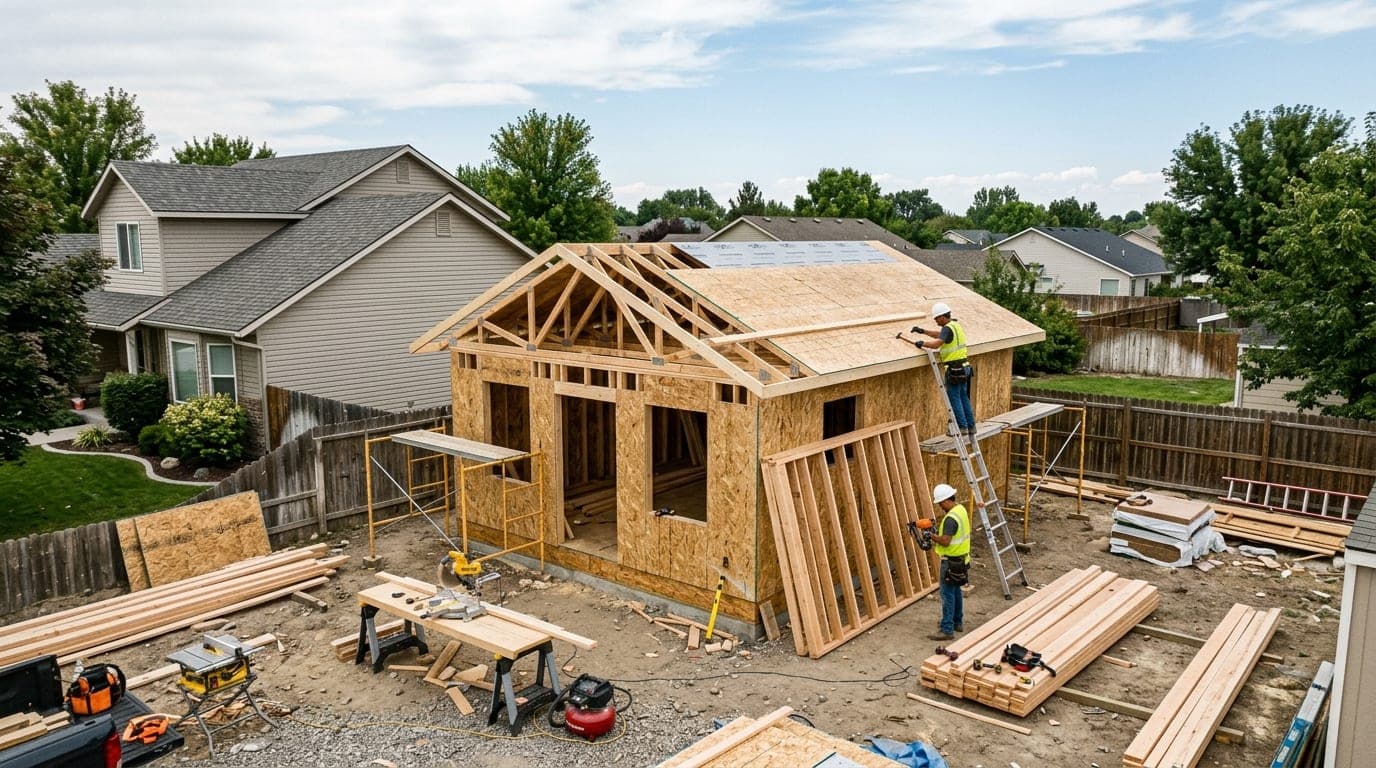
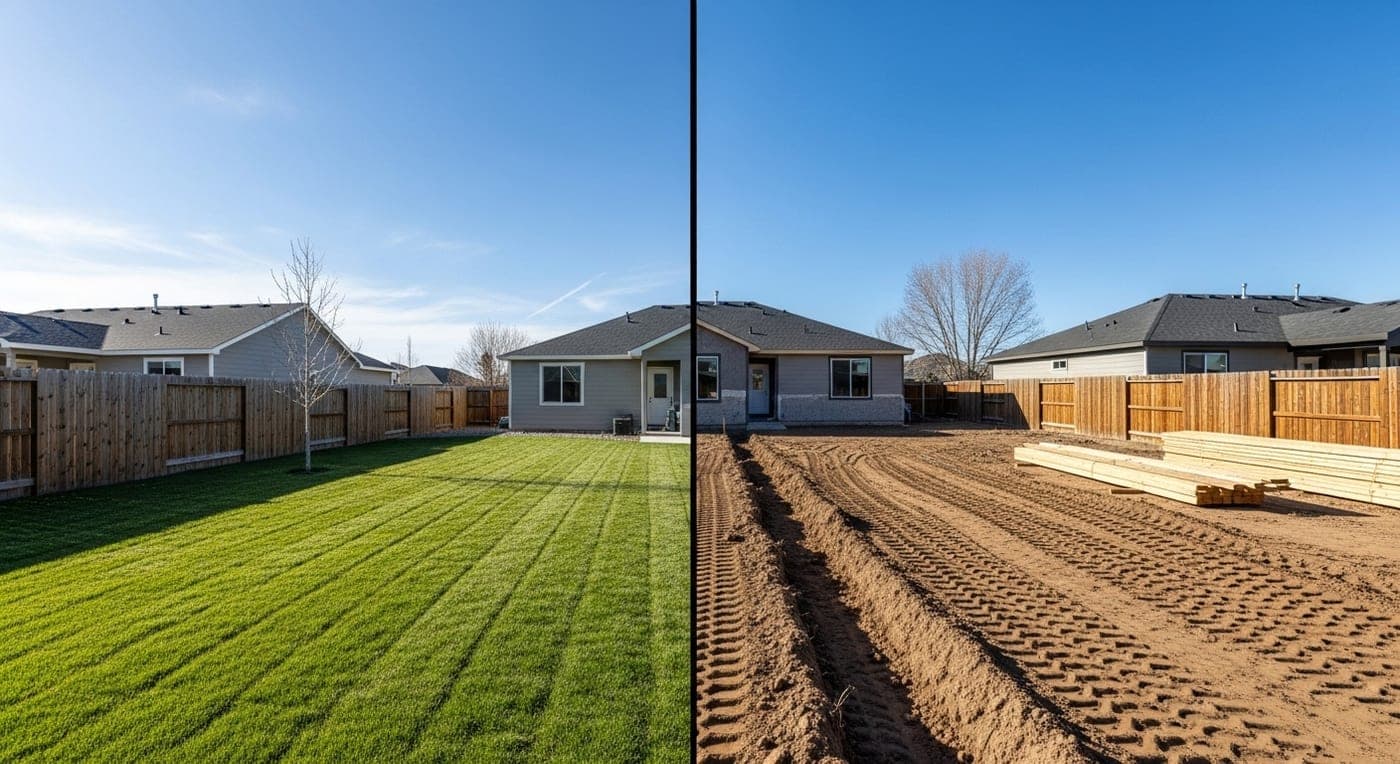
Only the new improvement is assessed. When you build an ADU, the county assessor adds the value of the new structure to your property's assessed value. Your existing home's assessed value does not change because you added a building in the backyard. The Ada County Assessor's office confirms that the new construction roll captures "the net taxable market value of the improvement(s) that did not previously exist," not a revaluation of existing structures.
The assessed value of the ADU is based on its market value. The assessor will estimate what the ADU adds to your property's overall market value. This is influenced by the size of the unit, the quality of construction, the finishes, and comparable properties in the area. In practice, the assessed value of a new ADU often tracks closely to its construction cost in the first few years.
Your primary home continues to be assessed on its normal cycle. Idaho reassesses 100% of properties every five years as part of its standard reappraisal cycle. Your home's value will change over time based on market conditions regardless of whether you build an ADU. The ADU doesn't accelerate or trigger that cycle.
The Idaho Homeowner's Exemption: What Stays and What Doesn't
Idaho offers a homeowner's exemption that reduces the taxable value of your primary residence. Understanding how it interacts with an ADU matters.
The exemption covers 50% of your home's assessed value, up to a maximum of $125,000. It applies to your primary residence and up to one acre of land. You must own and occupy the home as your primary residence to qualify.
Your homeowner's exemption stays in place when you add an ADU. Building an ADU does not disqualify you from the exemption on your primary home. Your house is still your primary residence. The exemption still applies to it.
The ADU itself does not qualify for a separate homeowner's exemption. The exemption is limited to one primary residence per owner. An ADU used as a rental unit or guest space is not a primary residence, so it does not receive the 50% exemption. The full assessed value of the ADU is taxable.
Example: Your home is assessed at $300,000. With the homeowner's exemption, the taxable value drops to $175,000 (a $125,000 reduction). You build a $120,000 ADU. The ADU's full $120,000 is added to your taxable value. Your new taxable total is $295,000. The exemption saved you $125,000 on the house. The ADU is taxed at its full assessed value.
The Actual Math for Twin Falls
Let's run the numbers for a typical Twin Falls ADU project. These figures use publicly available tax rate data and realistic construction cost ranges for the Magic Valley.
Twin Falls County effective tax rate: Approximately 0.55% to 0.72%, depending on your specific location and taxing districts. SmartAsset reports an effective rate of 0.55% for Twin Falls County. Ownwell's data shows a median effective rate of 0.58% for properties within the city of Twin Falls. We'll use 0.6% as a reasonable middle estimate.
Scenario 1: A $100,000 garage conversion
Additional assessed value: $100,000. At a 0.6% effective rate, the annual property tax increase is approximately $600 per year, or $50 per month. If the converted unit rents for $850 per month, the tax increase represents about 5.9% of gross rental income.
Scenario 2: A $120,000 detached ADU (600 sq ft)
Additional assessed value: $120,000. At a 0.6% effective rate, the annual property tax increase is approximately $720 per year, or $60 per month. If the unit rents for $1,000 per month, the tax increase represents about 6% of gross rental income.
Scenario 3: A $175,000 detached ADU (800 sq ft, higher finishes)
Additional assessed value: $175,000. At a 0.6% effective rate, the annual property tax increase is approximately $1,050 per year, or $87.50 per month. If the unit rents for $1,100 per month, the tax increase represents about 7.9% of gross rental income.
In all three scenarios, the property tax increase is a small fraction of the rental income the unit generates. The tax increase is real, but it's not the budget-breaker that most homeowners fear.
What About Property Value Appreciation?
Property taxes go up when you add an ADU, but so does your property's overall value. That's not a bug. That's the investment working as intended.
The additional assessed value from an ADU means your equity grows. If you sell the property, the ADU's value is reflected in the sale price. You're not just paying higher taxes. You're paying higher taxes on a more valuable asset that generates income in the meantime.
The net financial picture for most Twin Falls ADU owners looks something like this:
Annual rental income: $10,800 to $13,200 (at $900 to $1,100/month). Annual property tax increase: $600 to $1,050. Net income after tax increase: $9,750 to $12,600 per year, before other operating expenses.
That's a meaningful return on a $100,000 to $175,000 investment, even before you factor in property value appreciation.
Does Idaho Offer Any ADU-Specific Tax Breaks?
As of 2026, Idaho does not have an ADU-specific property tax exemption, credit, or deferral program. Unlike California, which has Prop 13 protections that limit reassessment on the primary home, or Oregon, which has explored ADU-specific tax incentives, Idaho's tax code treats an ADU the same as any other new construction on your property.
That said, two existing programs may help certain homeowners:
The Property Tax Reduction Program (Circuit Breaker). If you're 65 or older, blind, widowed, disabled, or a veteran with a service-connected disability, and your 2025 income after medical deductions was $39,130 or less, you may qualify for a $250 to $1,500 reduction in your property taxes. This applies to your primary residence and up to one acre of land.
The Property Tax Deferral Program. Qualifying homeowners can defer property tax payments, essentially converting them into a lien that's repaid when the property is sold. Income limits apply (2025 income below $61,674 for the 2026 program). This doesn't reduce your taxes, but it delays when you pay them.
Neither of these programs is ADU-specific, but both can help offset the total property tax burden for qualifying homeowners who add an ADU.
Impact Fees Under SB 1354: A Related Cost to Understand
Idaho's new ADU law (SB 1354, effective July 1, 2026) includes a provision that directly affects your upfront costs: cities cannot charge impact fees or utility connection fees for ADUs that exceed what they charge for other single-family dwellings. This doesn't eliminate impact fees, but it prevents cities from imposing ADU-specific surcharges that inflate your costs beyond what any other residential construction would pay.
This matters because impact fees are a one-time cost at the permitting stage, while property taxes are ongoing. Knowing that both are capped proportionally to standard residential rates helps you build a more accurate budget from day one.
How to Estimate Your Own Tax Increase Before You Build
You don't need to wait until the ADU is finished to get a rough estimate of your property tax increase. Here's a simple formula:
Estimated construction cost × your local effective tax rate = approximate annual tax increase.
To find your effective tax rate, look at your most recent property tax bill. Divide the total tax amount by your property's assessed value (before the homeowner's exemption). That gives you your effective rate.
For example: if your current tax bill is $1,800 on an assessed value of $300,000, your effective rate is 0.6%. A $120,000 ADU would add roughly $720 per year.
For a more precise estimate, contact the Twin Falls County Assessor's office at (208) 736-4010. They can tell you exactly how new construction in your taxing district would be assessed and what rate applies.
Frequently Asked Questions
Will building an ADU trigger a reassessment of my entire property?
No. Idaho assessors add only the value of the new improvement. Your existing home's assessed value is not changed because you added an ADU. The county places the new construction on a separate roll that captures the value of improvements that didn't previously exist.
Does my homeowner's exemption go away if I build an ADU?
No. Your homeowner's exemption stays in place on your primary residence. The ADU does not qualify for a separate exemption, so its full assessed value is taxable. But your house keeps its existing exemption.
How soon after building will my taxes go up?
The increase typically appears on your next property tax bill after the ADU receives a certificate of occupancy and the assessor records the new construction. In Idaho, the new construction roll is finalized by the first Monday in June, so the timing depends on when your project is completed relative to that date.
Is a garage conversion taxed differently than a detached ADU?
The assessment method is the same: the assessor estimates the market value added by the improvement. However, a garage conversion typically adds less assessed value than a detached new build because you're modifying an existing structure rather than constructing a new one from scratch. A $70,000 garage conversion adds less to your tax bill than a $150,000 detached unit.
Can I appeal my property tax assessment if I think the ADU is overvalued?
Yes. Idaho homeowners can appeal to the local Board of Equalization if they disagree with their assessed value. The appeal deadline is typically in late June (June 22, 2026 for the current year). You'll need evidence such as construction cost documentation, comparable property values, or an independent appraisal.
Does rental income from my ADU affect my income taxes too?
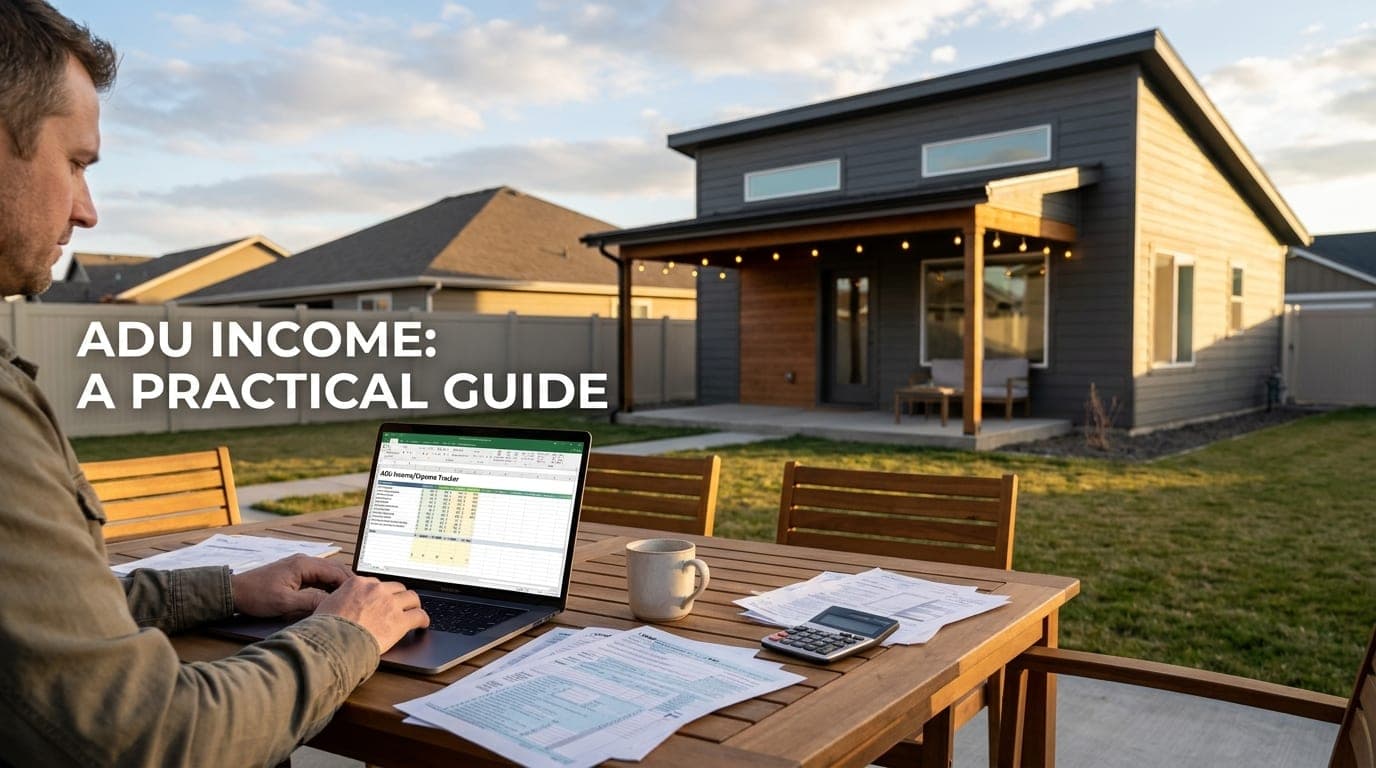
Yes, but that's separate from property taxes. Rental income is reportable on your federal and state income tax returns. You can deduct expenses related to the rental unit, including a portion of your property taxes, mortgage interest, insurance, maintenance, and depreciation. Consult a tax professional for guidance specific to your situation.
What if I use the ADU for family rather than renting it?
Your property taxes increase the same way regardless of how you use the ADU. The assessed value is based on the improvement itself, not whether it generates income. The financial offset is different (no rental income to cover the tax increase), but the tax mechanics are identical.
If you're running the numbers on an ADU project in Twin Falls and want to understand the full financial picture, including property taxes, construction costs, rental income projections, and financing options, reach out to Twin Falls ADU Guys. A feasibility check puts real numbers in front of you before you commit to anything, so you can make the decision with your eyes open.
Twin Falls ADU Guys Team
Twin Falls ADU Guys