What It Actually Costs to Run an ADU in Twin Falls in 2026
TL;DR: A well-built ADU in Twin Falls costs roughly $75 to $175 per month in total utilities depending on size, systems, and metering. Idaho has some of the lowest electric rates in the country at about 11.88 cents per kWh, which keeps the biggest line item manageable. Water, sewer, and trash add $40 to $75 per month. Whether to run a gas line or go all-electric, and whether to install a separate utility meter, are decisions that affect both your build cost and your long-term operating numbers. This guide breaks down each utility with local Twin Falls rates so you can budget accurately before you break ground.
Why Utility Costs Matter Before You Break Ground
Utility costs are part of your ADU's financial story from day one. If you are building a rental unit, they affect your net cash flow. If a family member is moving in, they affect what you might ask them to contribute each month. Either way, ignoring them leads to surprises.
According to utility-rates.com, the average utility bill in Idaho sits at approximately $224 per month in 2026, covering electricity, water, sewer, and trash. That is a statewide average for a full-size home. A well-designed ADU, because of its smaller footprint, can come in significantly below that number. But how far below depends on size, construction quality, and how the unit is metered.
Electric Costs for a Twin Falls ADU
Electricity is typically the biggest utility expense for a small ADU, especially if the unit is all-electric with no gas line. The good news is that Idaho has some of the lowest electric rates in the nation.
Twin Falls County residents served by Idaho Power pay an average residential electric bill of approximately $108 per month at 11.88 cents per kilowatt hour. For a 400 to 650 square foot ADU, you can expect to use considerably less electricity than a full home, often in the range of 300 to 500 kWh per month depending on the season and how the unit is built.
A realistic electric budget for a well-insulated ADU in Twin Falls, based on local rates and typical small-dwelling usage patterns:
400 sq ft studio or 1-bedroom (good insulation, mini-split heat pump): $35 to $60 per month average.
500 to 650 sq ft with electric water heater: $60 to $95 per month average.
Larger 800 sq ft unit, all-electric: $90 to $130 per month average.
Winter months with electric heat: Expect 20 to 40 percent higher than summer baseline.
One thing to factor into your 2026 projections: Idaho Power has filed a Power Cost Adjustment that, if approved by the Idaho Public Utilities Commission, would result in a 3.15 percent monthly bill increase for a typical residential customer using 900 kWh per month. New rates would take effect June 1, 2026. For an ADU using far less than 900 kWh, the dollar impact is small (likely under $2 per month), but it is worth factoring into your long-term projections if you are underwriting a rental.
Building tight matters here. A prefab or site-built ADU with proper insulation, a heat pump mini-split, and energy-efficient appliances can keep electric costs at the low end of these ranges year-round. If you are weighing prefab versus site-built, we cover that comparison in our ADU vs. home addition guide.
Water and Sewer: What the City Charges and How ADUs Are Handled
Water and sewer costs for a Twin Falls ADU depend heavily on how the unit is connected. There are two common scenarios: tying into the existing home's meter or pulling a separate meter for the ADU. Each has financial and practical trade-offs.
The City of Twin Falls manages residential sewer billing based on metered water use up to 12,000 gallons per month. That structure matters because if your ADU is on a shared meter with the primary home, your combined usage could push you into higher rate tiers during summer irrigation months.
For a small ADU with one or two occupants, typical water usage runs between 1,500 and 3,500 gallons per month. Here is a rough breakdown of what to expect:
Water supply (shared meter): Incremental cost of $15 to $30 per month for the ADU portion.
Sewer service: $25 to $45 per month depending on usage tier.
Trash (if separate collection): $18 to $28 per month.
Separate meter installation: One-time cost of $2,500 to $6,000 or more depending on connection complexity, based on typical Magic Valley project costs.
If you plan to rent the ADU independently and have the tenant pay utilities, a separate meter is often worth the upfront investment. It creates a clean financial separation and eliminates billing disputes. This is one of the decisions that should be made during the permitting and design phase, because the answer depends on your lot layout and long-term goals. Our permitting timeline guide covers how these decisions fit into the overall sequence.
Natural Gas: Is It Worth Running a Line?
Not every ADU in Twin Falls needs a gas line, but for homeowners who want a gas range, gas water heater, or gas furnace in the unit, it is worth understanding the cost picture before you commit.
Intermountain Gas Company is the natural gas provider for Twin Falls and most of southern Idaho, serving over 300,000 customers across the region. A small ADU using gas for heating and hot water might use between 15 and 40 therms per month during winter, dropping to near zero in summer. At current Intermountain Gas rates, that translates to roughly $20 to $55 per month in winter and $10 to $15 per month in the off-season for the gas commodity itself, not counting the monthly service charge.
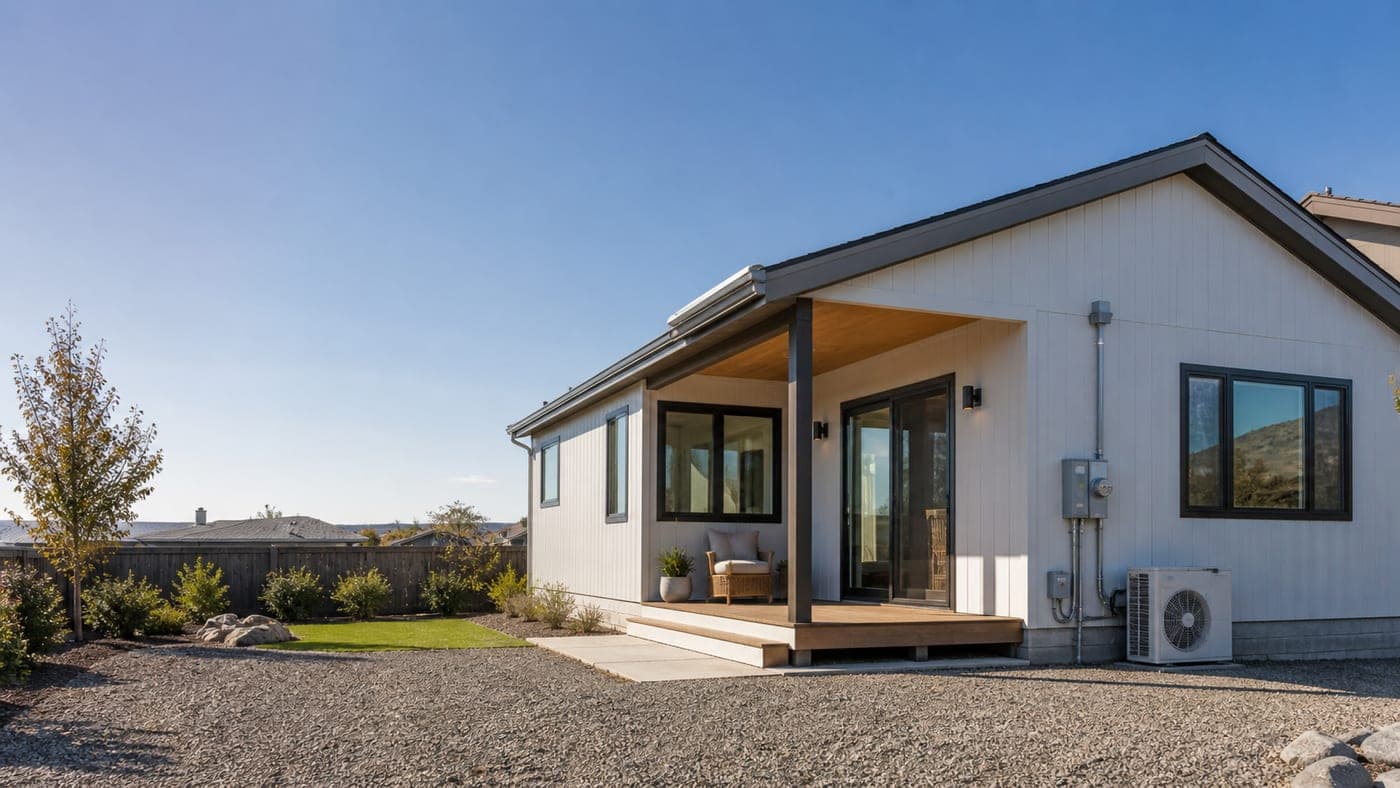
Running a new gas line to a detached ADU adds cost to the build, often $1,500 to $4,000 depending on distance and trenching requirements. For many homeowners building smaller ADUs, an all-electric approach with a heat pump mini-split and a heat pump water heater is both cheaper to install and cheaper to operate over time. This is especially true given how affordable Idaho electricity is compared to the national average.
That said, some tenants genuinely prefer gas cooking, and in a competitive rental market, small amenities matter. It is worth discussing with your builder whether the tradeoff makes sense for your specific unit. The gas line installation cost is one of the hidden construction costs that can catch homeowners off guard if it is not budgeted early.
Total Monthly Utility Budget: Putting It All Together
So what should you actually plan for? Here are realistic combined utility estimates for a typical Twin Falls ADU in 2026, based on local rates and our project experience:
400 to 500 sq ft all-electric ADU: $75 to $120 per month total (electric, water, sewer, trash).
600 sq ft ADU with gas heating and hot water: $110 to $165 per month total.
700 to 900 sq ft ADU, all-electric with good insulation: $120 to $175 per month total.
For context, Idaho's utility costs run roughly 26 percent below the national average, making Twin Falls one of the more affordable places in the country to operate a small dwelling unit. A smaller ADU should land comfortably below statewide averages for full-size homes.
Here in Twin Falls, a 600 sq ft unit can rent for $900 to $1,100 per month. Even if utilities run $130 to $150 per month and you are covering them as the landlord, the numbers still work well in most construction loan scenarios. The key is knowing these figures before you finalize your unit size and systems layout.
Once your ADU is built and occupied, keeping utility costs low over time comes down to maintenance. Our spring inspection checklist covers the annual tasks that protect both your investment and your operating costs.
Ready to Get Real Numbers for Your Property?
If you are planning an ADU in Twin Falls or anywhere in the Magic Valley, utility costs should be part of your feasibility conversation from the start, not an afterthought. Twin Falls ADU Guys offers a free Readiness Call that takes 10 to 15 minutes. We will ask about your property, your goals, and how you plan to use the unit, then give you an honest picture of what both construction and operating costs look like for your situation.
We also offer a detailed feasibility check that covers zoning, setbacks, utility access and capacity, lot coverage, and budget expectations, including metering decisions and system recommendations.
You can schedule your Readiness Call at twinfallsaduguys.com or call us directly at (208) 613-9830.
Frequently Asked Questions
Do I need a separate utility meter for my ADU in Twin Falls?
Not always, but it depends on your goals. If you are renting the unit to an unrelated tenant, a separate meter makes billing simpler and eliminates disputes. If a family member is using the space, a shared meter is often fine. The City of Twin Falls has specific connection requirements that should be confirmed during the planning phase.
Will my main home's utility bills go up significantly when I add an ADU?
If the ADU is on a shared meter, yes, you will see an increase, though a well-insulated small unit adds less than many homeowners expect. If it is on a separate meter, your primary home's bills stay largely the same. Water and sewer charges may increase slightly due to higher combined usage on a shared service line.
Is an all-electric ADU cheaper to run than one with gas in Twin Falls?
In most cases, yes. Idaho Power's rates are among the lowest in the country, and modern heat pump technology has made all-electric systems very efficient for both heating and hot water. The bigger factor is insulation and building quality. A well-built all-electric ADU in Twin Falls can run total utility costs under $100 per month for a smaller unit, especially in moderate seasons.
How do prefab ADUs compare to site-built units on utility costs?
Prefab units from quality manufacturers are often built to tight energy standards and can perform very well on utility costs. The key variables are insulation ratings, window quality, and what systems (heating, water heating) are included. Well-built prefab units can match or beat site-built construction on energy performance when they are properly installed on a well-prepared foundation.
Can I include projected utility costs in my ADU financing plan?
Yes, and you should. Lenders who specialize in ADU financing often want to see a full operating cost picture, not just construction costs. Knowing your projected utilities helps you accurately calculate net rental income, which strengthens your loan application. We cover how rental income factors into loan qualification in our financing myths guide.
Will the Idaho Power rate increase affect my ADU's operating costs significantly?
The proposed 3.15 percent increase, if approved, adds roughly $1 to $3 per month for a typical ADU depending on size and usage. For a 500 sq ft all-electric unit using 400 kWh per month, the increase would be approximately $1.50 per month. It is worth noting in your projections but it is not a budget-changing number for most ADU owners.
Twin Falls ADU Guys Team
Twin Falls ADU Guys