TL;DR:
A wet spring in Twin Falls can add three to six weeks to your ADU construction timeline, but only certain phases are vulnerable. Foundation work, site grading, utility trenching, and exterior finishing all need dry conditions. Framing and interior work can often continue. The clay-heavy soils common across the Magic Valley hold moisture longer than other soil types, which extends dry-out times after even light rain. The key is sequencing your project so weather-sensitive phases land in the driest window and building buffer into your timeline from day one.
Why Spring Weather Matters More Than You Think in Magic Valley
Twin Falls sits in a high desert climate, but that label is misleading when it comes to construction. March through May brings meaningful precipitation, and the clay-heavy soils common throughout the Magic Valley hold moisture longer than sandy or loam soils. That combination creates real problems for foundation work, trenching, and concrete pours.
The scale of the problem is well documented. A systematic review published in MDPI's Sustainability journal found that adverse weather delays 45 percent of construction projects worldwide, costing billions of dollars annually. ADU builds are small-scale projects, but they face the same vulnerabilities as larger ones, just with smaller budgets to absorb the impact.
Even light rain matters more than most homeowners expect. According to Workyard's construction weather analysis, even minimal rainfall around 0.05 inches per hour can reduce construction productivity by 10 to 15 percent, with wet surfaces increasing slip and fall incidents by roughly 25 percent. That is not a dramatic storm. That is a light Tuesday morning drizzle in April.
Which Phases of Your ADU Build Are Vulnerable to Rain
Not every stage of construction is equally affected. Understanding which phases need dry conditions helps you set realistic expectations and have smarter conversations with your contractor.
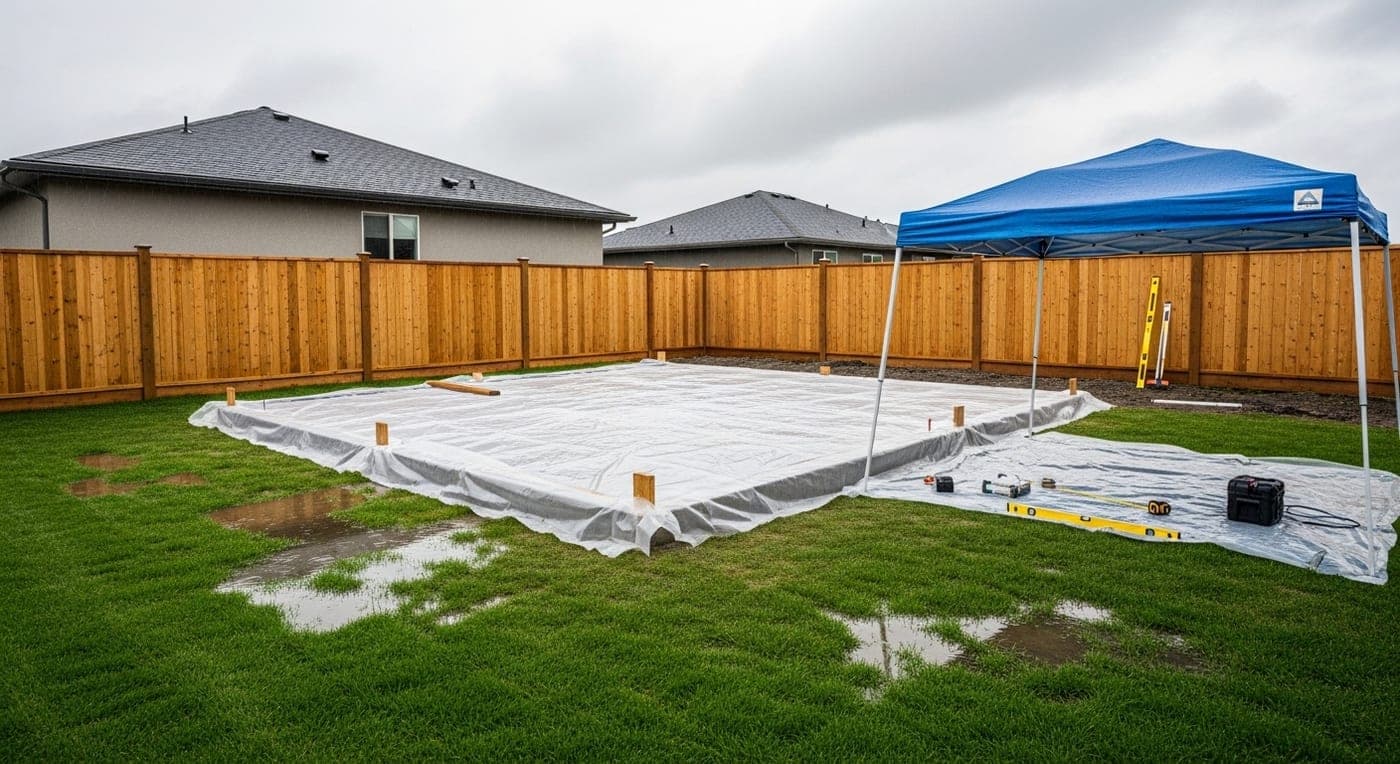
Site prep and grading. Saturated soil cannot be properly compacted. If crews grade your lot during wet conditions, you risk uneven settling later, which leads to foundation cracks or drainage problems that cost far more to fix than the delay would have. Clay-heavy soil is especially problematic here because it stays workably soft long after rain stops, then shrinks and cracks as it dries unevenly.
Foundation excavation and pouring. Concrete needs dry, stable conditions to cure correctly. Excess ground moisture or standing water in a footing trench can compromise the structural integrity of the pour. Most reputable builders will not pour in active rain, full stop. The Twin Falls County Building Department reviews against the 2018 IRC with Idaho Amendments, which specifies a 24-inch frost depth for the area. Your footings need to reach below that line in soil that is stable enough to bear the load, and saturated spring soil complicates both the depth and the stability.
Dry utility trenching. Electrical conduit and gas line trenches fill with water quickly in wet conditions. This is not just a delay issue. It is a safety and inspection issue. Inspectors will not sign off on flooded trenches, and work cannot resume until they drain and dry sufficiently.
Framing. Once framing starts, lumber exposed to extended wet periods can warp, swell, or develop early mold. A few days of rain with tarps in place is manageable. Two weeks of intermittent showers with exposed framing is a problem that affects the quality of the finished structure.
Exterior finishing and roofing. Roofing adhesives and sealants have specific temperature and moisture requirements. Rushing these in wet conditions is how you end up with callbacks and warranty claims a year later.
What can continue in rain: Interior rough-in (electrical, plumbing, HVAC once the building is dried in), insulation, drywall, finish carpentry, painting, and fixture installation. A contractor who sequences well will shift crews to interior work during wet days rather than losing the day entirely.
When you add these phases up, a wet spring can realistically push a 90-day ADU build to 110 or even 120 days without anyone doing anything wrong. It is just physics and weather.
What a Realistic Spring Timeline Looks Like
A standard 600 square foot detached ADU in Twin Falls, built on a slab foundation, typically takes 10 to 14 weeks from breaking ground to certificate of occupancy under normal summer conditions. Add a wet spring start, and you are looking at 14 to 18 weeks for the same scope of work.
The delay usually is not one big weather event. It is a series of small ones. Your crew loses two days in March waiting for the ground to dry out after a rain. They lose another three days in April because a cold front drops overnight, temperatures too low for a concrete pour. Then, inspection scheduling adds a few extra days because the inspector has a backlog from other projects that were also delayed.
We walk through the full April-to-September ADU timeline here, including how each phase fits together under normal conditions. The weather adjustment is roughly 20 to 30 percent added time for a spring start, mostly concentrated in the site work and foundation phases.
Five Practical Ways to Plan Around Wet Weather
1. Start the permit process in winter. This is the single highest-leverage move. Permitting in Twin Falls typically takes six to twelve weeks for a complete application. If you submit in January or February, you can have approvals in hand by early spring, ready to move the moment ground conditions cooperate. Waiting until spring to submit means you are permitting and trying to build in the same wet window.
2. Schedule foundation work for late May or early June. In most years, late May through early June offers the most stable dry window before summer heat becomes its own complication. If your permit is in hand by April, you can use the remaining wet weeks for material ordering and site layout while keeping the pour date in the dry window.
3. Build weather contingency into your contract. Any solid construction contract should have explicit language about weather-related delays. Understand what qualifies as an excusable delay, how extra days are calculated, and who bears the cost of idle time. This is also covered in our guide to hidden ADU construction costs that catch homeowners off guard.
4. Consider a prefab or modular unit. Prefabricated ADU units are built in a controlled indoor environment, which eliminates most weather-related framing and finishing delays. Site prep and foundation work still involve some exposure, but the bulk of the construction happens under a roof, regardless of what is happening outside. If your timeline is tight, prefab can compress the weather-vulnerable phases significantly.
5. Confirm your site drainage before you start. Poor drainage around your ADU site amplifies every weather delay. A site that drains well dries out in a day or two after rain. A site with drainage problems stays wet for a week. Your soil test and feasibility check should include a drainage assessment so you know what you are dealing with before the first shovel hits the ground.
The Real Cost of Waiting for Perfect Weather
Here is the thing: most homeowners do not consider. Waiting for perfect conditions before you start the planning process costs you time just as surely as a weather delay does.
Wet weather delays a build by weeks. Waiting to start the process delays it by months. Those are very different problems, and only one of them is actually outside your control. If you have been holding off because the weather does not feel right, consider that the planning and permitting phase has its own window that is easy to miss. You can be working through feasibility, design, and permitting right now, in any weather, so that you are ready to build the moment conditions allow.
Ready to Build Your Timeline?
If you are planning a spring or summer ADU build in Twin Falls, the weather is a factor you can plan around, not a reason to wait. Twin Falls ADU Guys offers a free Readiness Call that takes 10 to 15 minutes. We will assess your property basics, discuss your goals and timeline, and give you an honest picture of what a realistic schedule looks like given your start date and site conditions.
You can schedule your Readiness Call at twinfallsaduguys.com or call us directly at (208) 613-9830.
Frequently Asked Questions
Can construction continue during rain, or does everything stop?
Not everything stops. Framing, roofing, and interior work can often continue under cover during wet periods. What typically pauses is concrete work, foundation excavation, utility trenching, and exterior soil grading. A good contractor sequences tasks to keep progress moving even when conditions are not ideal for every phase.
How much extra time should I budget for a spring build?
A conservative rule of thumb is to add 20 to 30 percent to your expected timeline for a spring start. If your contractor estimates 12 weeks under ideal conditions, plan for 14 to 16 weeks. This is especially true if your build involves significant site work or a poured concrete foundation on clay-heavy soil.
Does wet weather affect the cost of my ADU, or just the schedule?
Primarily the schedule, but indirectly the cost. Extended timelines can affect financing costs if you are on a construction loan or HELOC. They can also affect material pricing if delays push delivery windows. A well-written contract with weather contingency clauses protects you from paying for idle labor during weather holds.
Would a prefab ADU be faster during a wet spring?
In most cases, yes. The bulk of a prefab unit is built indoors regardless of outside weather. You still need dry conditions for site prep, foundation, and utility connections, but the framing and finishing phases that are most vulnerable to rain happen in a controlled factory environment. This can save several weeks on a spring timeline.
When should I start the process if I want to build this year?
As early as possible. Feasibility, design, and permitting can all happen in any weather. If you want to break ground in late spring or early summer, the planning process should start in winter or early spring. That gives you time to work through permitting without rushing and puts you at the front of the contractor schedule when dry building season opens up.
Why does clay soil make wet weather delays worse?
Clay soil absorbs and holds water much longer than sandy or loamy soil. After a rain event, a sandy site might be workable again in 24 to 48 hours. A clay-heavy site can stay too saturated for grading or excavation for five to seven days. In the Magic Valley, where clay content varies significantly by neighborhood, a geotechnical soil test tells you exactly what type of soil you are dealing with so your contractor can plan accordingly.
Twin Falls ADU Guys Team
Twin Falls ADU Guys