TL;DR:
A prefab ADU in Twin Falls typically costs $60,000 to $110,000 from the manufacturer, but delivery, foundation, and utility hookups can push the all-in price to $120,000 to $150,000. A custom-built unit runs $110,000 to $180,000 all-in but integrates utilities more efficiently, fits irregular lots, and typically commands higher rent and appraisal value. Over five years, the rental income gap between a well-designed custom unit and a basic prefab often closes most of the upfront cost difference. The right choice depends on your lot, your timeline, and whether speed or long-term return matters more.
What Pre-Fab ADUs Actually Cost
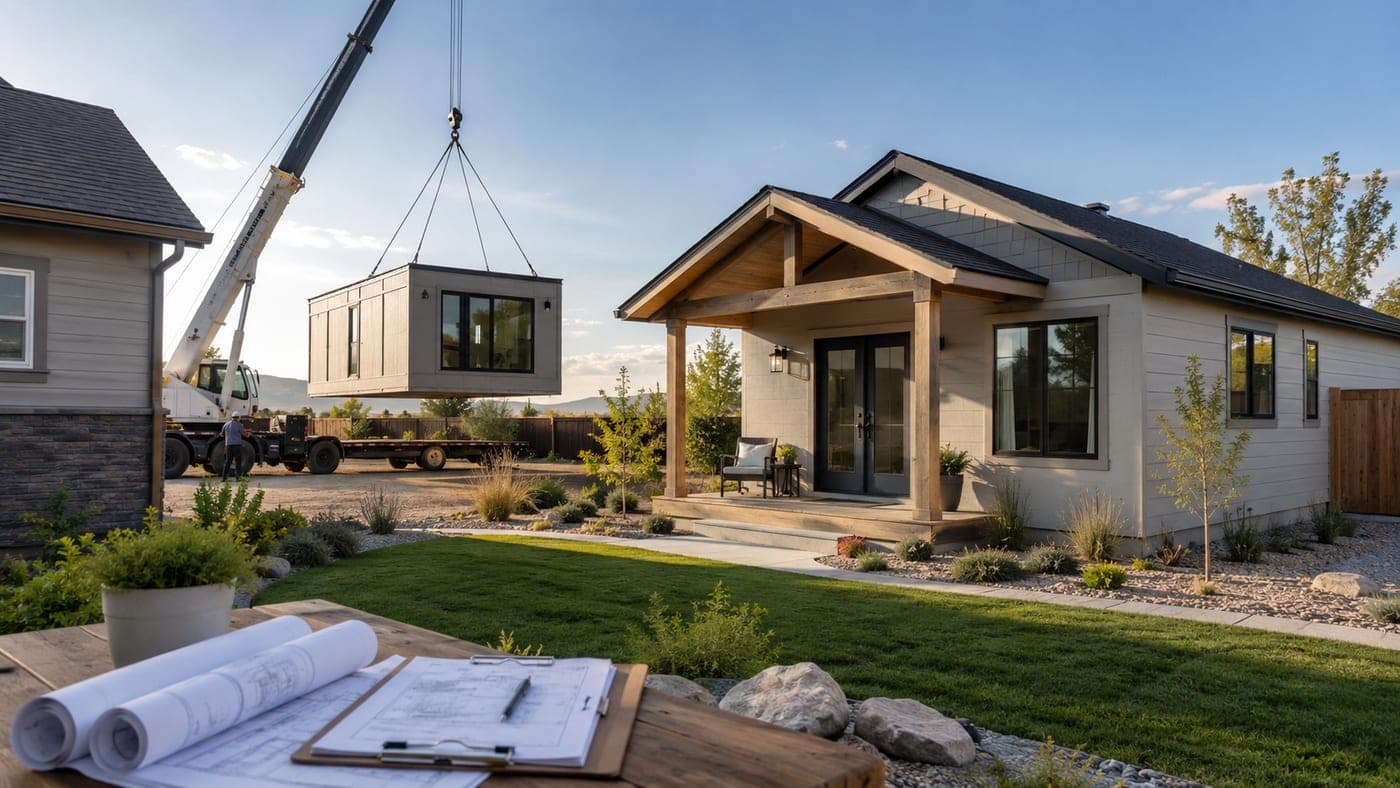
Prefabricated units arrive mostly built and get placed on your property with a crane. The appeal is obvious: faster construction, factory-controlled quality, and a price tag that looks friendlier on paper. A typical prefab ADU in the 400 to 600 square foot range might carry a base price of $60,000 to $110,000 from the manufacturer.
That base price rarely includes everything. According to Steadily's overview of ADU costs in Idaho, rough estimates for new ADU construction in Idaho run from $80,000 to $200,000 or more regardless of whether you are going prefab or custom, once all site costs are included.
In practice, Twin Falls homeowners often find these additional costs stacking up:
Delivery and crane fees: $8,000 to $15,000 depending on distance from the manufacturer and site access.
Foundation and grading: $12,000 to $20,000. Many Twin Falls lots have rocky or uneven terrain that adds cost.
Utility connections: $10,000 to $25,000 depending on how far you are running electrical, gas, water, and sewer lines. We break down ongoing utility operating costs here.
Permit fees: You need full permitting even for a prefab unit, which takes the same time and money as a custom build.
Customization premiums: A different exterior finish, layout modification, or upgraded fixtures from the factory cost more than most homeowners expect.
Code compliance modifications: Some prefab designs require alterations to meet Twin Falls building codes or HOA design standards.
A realistic all-in budget for a prefab ADU in Twin Falls is $120,000 to $150,000 once these costs are included.
What Custom ADUs Cost and Where They Win
A custom-built ADU is designed and constructed specifically for your property. That means your builder accounts for lot shape, setback requirements, existing utility locations, and your personal needs from day one. Based on our project experience, a well-planned custom unit in the 500 to 700 square foot range typically runs $110,000 to $180,000 all-in, depending on finishes and site complexity.
That number is higher upfront, but consider what you get. A custom unit built on your specific lot often integrates utilities more efficiently, avoids expensive retrofits, and can be positioned to maximize rental appeal or privacy. A 600 square foot custom unit on a standard Twin Falls lot can rent for $900 to $1,100 a month, which goes a long way toward covering a construction loan payment.
Custom builds also give you flexibility that prefab cannot match. If you have setback constraints or an irregular parcel, a custom design can thread the needle where a prefab unit simply will not fit or will not pass inspection. We cover strategies for building on tight lots here.
If your property has a garage you are considering converting, that opens a third path that is often faster and cheaper than either option. Our post on garage conversions vs. detached ADUs covers the tradeoffs.
The Twin Falls ADU Market Is Moving in the Right Direction
The Idaho Policy Institute at Boise State University published a South Central Idaho Housing Analysis in 2025 that identified the permitting process as a significant barrier to affordable housing development in the region. City officials in Twin Falls acknowledged this challenge and noted ongoing efforts to streamline permitting through internal reforms. The report also documented that Twin Falls has one of the lowest vacancy rates in the region, signaling limited housing availability and strong rental demand.
That context matters for both prefab and custom builders. The Harvard Joint Center for Housing Studies notes that ADUs increase opportunities for multifamily housing and can stimulate affordable rental rates, though restrictive zoning has slowed development in some markets. Twin Falls is actively working to change that, and SB 1354 (signed March 2026) now prevents the city from banning ADUs entirely.
The Real Comparison: Total Cost Over Five Years
The smartest way to compare prefab and custom is not to look at build cost alone. It is to look at total investment versus rental income over time.
A prefab unit with all-in costs of $140,000 renting at $850 per month generates about $51,000 in gross rent over five years. A custom unit at $160,000 all-in renting at $1,050 per month generates $63,000 over the same period. The custom unit cost $20,000 more to build but earned $12,000 more in rent, closing most of the gap. Add in higher appraised value for a well-integrated custom unit and the long-term math often favors custom.
That said, prefab wins in specific situations:
Speed matters. A prefab unit can be occupiable in three to five months versus six to ten for a custom build. If you are covering carrying costs on a construction loan or need rental income quickly, prefab gets you there faster.
Your lot is straightforward. If utilities are close, the site is flat, and setbacks leave plenty of room, the prefab cost advantages hold because the hidden site costs stay low.
Budget certainty is the priority. Prefab pricing is more predictable because the structure is manufactured to a fixed specification. Custom builds carry more variability in final cost.
How Financing Works Differently for Each Path
Construction loans, HELOCs, and cash-out refinances all structure differently for prefab versus custom. For a custom build, construction loans are drawn in stages as work is completed. For a prefab unit, you may need to pay a large portion to the manufacturer before the unit ships, which affects how your loan needs to be structured.
The Brookings Institution notes that expanding ADU adoption requires more financial support and higher homeowner participation rates. We think it also requires better information at the start of the process. Talk through your financing before you pick a path, not after. Our financing myths guide covers the most common misconceptions.
Ready to Figure Out Which Option Fits Your Property?
Whether you lean prefab or custom, the first step is the same: find out what your specific lot, setbacks, and utility access actually allow. Twin Falls ADU Guys offers a free Readiness Call that takes 10 to 15 minutes. We will look at your property basics, discuss your goals and budget, and tell you honestly which path makes more sense for your situation.
We build both prefab and custom ADUs across the Magic Valley, so we do not have a financial incentive to push you toward one over the other. The right answer depends on your lot, your timeline, and your numbers.
You can schedule your Readiness Call at twinfallsaduguys.com or call us directly at (208) 613-9830.
Frequently Asked Questions
Can a prefab ADU get permitted in Twin Falls?
Yes, but it requires the same permitting process as any other ADU. The unit must meet Idaho building codes and local zoning requirements, and you will need inspections at multiple stages. The manufacturer's stamped drawings cover the structure itself, but you still need a local site plan, foundation design, and utility connection plans.
What are the biggest hidden costs homeowners overlook?
Utility connection costs, especially trenching for electrical and gas lines, catch people off guard most often. Site preparation, foundation work, delivery fees, and permit fees are the others. Budget 15 to 20 percent above your base quote as a contingency regardless of which path you choose.
Does prefab or custom add more appraised value?
Custom units generally appraise higher because they are designed to integrate with the existing property and lot. Appraisers evaluate the unit as part of the whole property, and a custom build that matches the neighborhood aesthetic and maximizes the site tends to be valued more favorably. Prefab units add value too, but the appraisal depends heavily on comparable sales in the area.
How long does each type take to build in Twin Falls?
A prefab unit can be ready for occupancy in three to five months from signed contract, assuming permits move smoothly. A custom build typically runs six to ten months. Spring weather, permitting delays, and contractor availability can affect both timelines. We cover how seasonal weather affects construction schedules here.
Should I decide on financing before choosing prefab or custom?
Yes. The draw schedule on a construction loan works differently for a prefab purchase versus a custom build. Prefab often requires a large upfront payment to the manufacturer before the unit ships, while custom builds draw funds in stages as construction milestones are completed. Knowing your financing structure first prevents surprises mid-project.
Twin Falls ADU Guys Team
Twin Falls ADU Guys